Avoiding Burnout Over Your Board Members

By Mr. Zach Clark, who serves as the Director of Advancement at Westminster Christian Academy, St. Louis.

One of the questions I'm most often asked Stress_Man_Burnoutby other advancement leaders, school administrators, and even the occasional head of school, is:

"How do you relate to your board effectively?

This question is followed often by an emotionally-charged story, punctuated by groans of frustration.

Lurking behind this question are the unspoken, "How do I get the board to better support what I'm doing? How do you mobilize the board for positive impact? Or, how can I get along better with my board?"

This is an area where many school leaders openly admit a great deal of insecurity and frustration. I do have some key principles that after much prayer, some mistakes, and ongoing struggle I try to apply consistently.

0. I recognize that I am a person under authority, and that God purposefully places me under specific authority for my own good. That is the Head of School. His/her authority comes from the Board, so I am ultimately under the authority of the Board which holds in trust the mission of the school. I believe that God not only calls and equips you and me to advance His work, but positions us as well within a structure and under authority uniquely suited to accomplish His purposes for our role.

1. My “role” as director of advancement does not include any formal responsibility or role to influence the board nomination process. I do prayerfully seek the Lord for wisdom and opportunity to do the following on occasion: a)suggest a potential individual to a board member, asking if they have every been considered for board membership; or b)add individuals to various volunteer committees that might grow to make good potential board members in the future, should the board so lead.

2. I focus my primary board-related energy on growing and maintaining a great advancement committee (which is a board committee) rather than worrying about the board overall. I’m not sure if I do a great job with the advancement committee, but I have successfully grown the advancement committee, which has led to the addition of key new board members. I continue to serve alongside the committee members to shape the role of the committee and grow the committee with great individuals, some of whom might make great board members someday.

3. I also try to spend a great deal of time with individual board members. I don’t do this as well as I’d like, but I am committed to this approach and believe that God has been blessing my efforts in spite of myself. One expert I know suggests that you interact with board members as often as you would your most faithful and generous donors. This seems a good rule of thumb in evaluating the amount of time to invest in the board.

4. Lastly, and this goes along with the point about investing time, I work to keep my focus on learning as much as possible from each board member. It's easy for relationships between staff and board members to become acrimonious. Taking the time to know their families, prayer requests, skills and talents, and involvement in our community inside the school and out, helps keep my focus on them as people who God has called as a part of His plan for our school.

I'm sure I'll continue to add to this list as God provides new opportunities to learn. But for now, applying each principle with tangible habits and the investment of time is bearing fruit in my efforts to serve well.

Question: What habits to you live out in working with your board members?

Leading Your School In Uncertain Economic Times: Practical Suggestions

[Selloff]

By Dr. Barrett Mosbacker

Many experts predict that we are headed for a recession.  A recession in and of itself is not particularly worrisome.  Like breathing, expansions and retractions in the economy are normal and keep the economy healthy and vibrant over the long-term. What is of concern is that this recession may be deep and long.  According to the Wall Street Journal:

The bailout plan was needed but more needs to be done to fix things, and we're not even sure a rate cut will be enough," a trader at GFT Global Markets says. To many Wall Street veterans, a painful, long recession unlike anything the U.S. has suffered in decades seems increasingly likely.  (WSJ: Today's Markets, Oct. 6, 2008)

Given the turmoil on Wall Street and words like "crisis", "recession", "bank failure" and "depression" circulating in the media, it is not surprising that consumers have dramatically cut back on spending, The New York Times reports that:

[Big Discounts Fail to Lure Shoppers]

Cowed by the financial crisis, American consumers are pulling back on their spending, all but guaranteeing that the economic situation will get worse before it gets better ... But in recent weeks, as the financial crisis reverberated from Wall Street to Washington, consumers appear to have cut back sharply ... Recent figures from companies, and interviews across the country, show that automobile sales are plummeting, airline traffic is dropping, restaurant chains are struggling to fill tables, customers are sparse in stores.  Graph from the WSJ Business Section, Oct. 6, 2008-click on the graph to go to the article.

Whether the predictions of gloom and doom come true or not, it seems clear that we are in an extended economic slowdown, which may affect many of our schools. As school leaders, it is our responsibility to assess the situation and then to provide prayerful, faithful, and steady leadership. 

My good friend Zach Clark, Westminster Christian School (St. Louis), put it this way:

  1. We should have an attitude of gratefulness for the strengths we have as a Christian school like increased enrollment and strong budgets, freedom to make changes, talented staff, etc.

  2. Be steady during this time when everyone is looking for a reaction. Be realistic but confident in our ability to act.

  3. Be sure that our focus is on keeping our attitudes positive, and encourage each other to stir each other up to love and good deeds.

  4. Look for opportunities to be effective and efficient NOW.

  5. Become an expert in engaging and developing others, especially volunteers to improve our stewardship of resources and human resources.

  6. This is an opportunity to turn people’s focus to the substance of our work. To not only allow, but also enable others to determine the value of a Christian education.

  7. Wait and watch what the Lord will do, trusting in His faithfulness.

Preparing Our Students and Our Schools

So how do we prepare our schools for economic turndown, or even a possible prolonged recession?  The role of the leader is not to react but to respond prayerfully and strategically. If the economy spirals into a long recession it will affect our families and in turn, our schools.

I offer the following series of possible contingent responses for your prayerful consideration if, as seems inevitable, there is a sharp economic downturn.  Obviously, every school and local market is different, but perhaps one of these suggestions will be helpful.

1. Pray faithfully for your families and for your school ministry.  As I indicated in a previous post, I do not encourage prayer because it is the expected thing to say or because it is the politically correct preamble to a real solution. I say pray because in the final analysis it is the Lord who grants wisdom and who will provide for our needs.  Remember, your school ministry is the Lord's!

2. I refer you to my article Economic Crisis, Globalization, our Students, and our Mission (Era of U.S. financial dominance at an end: Germany) on possible ways to prepare your students for an economic downturn.

Budget_Finance_Calculator

3. As much as possible, move toward zero-based budgeting or at least look at your budget from that perspective.  Investopedia defines zero-based budgeting is "a method of budgeting in which all expenses must be justified for each new period. Zero-based budgeting starts from a "zero base" and every function within an organization is analyzed for its needs and costs."

This contrasts from the usual method of simply adding a percentage increase to existing budget categories or departments.  This requires a strategic approach to school leadership.  For more information, see my previous post: Are You Spread Too Thin? How to Thrive and Not Merely Survive as a Christian School.

4. Smaller schools need to assess the number of students per class to ensure that each class is at break-even on a contiguous basis.  Depending on the school's expenses and tuition levels, break-even is usually 16-18 students/full-time teacher.  If you have classes that are not at break-even you have built financial losses into the school's budget, which is never a good practice but is particularly problematic in during an economic downturn. 

If you are losing money in any class consider how you can consolidate classes.  For example, if you have two third grade classes, both of which are not at break-even, consider combining them and then hiring a full-time teacher and a full-time academic aide (and laying off the other teacher or making him/her the academic aide but at a lower salary (I know this is hard, but it may be the right thing to do).

Doing so will permit a larger financially viable class without sacrificing academic quality while reducing cost IF the teacher and academic aide are experienced and very effective.  Obviously, this could present some PR issues so great prudence must be exercised.  But if you have classes of say 13 each, combining them into a single class of 26 with a teacher and academic aide will cut cost without negatively affecting academic quality.

5. Increase financial aid.  This is, of course, easier said than done, but increasing financial aid may be essential. There are several ways to increase financial aid; 1) allocate/earmark a certain dollar amount from tuition specifically for financial aid.  For example, $50/student x's 300 students produces $15,000 in additional financial aid.  2) Approach parents with financial resources to contribute specifically to the financial aid fund.  3) If your school is a church ministry, ask the church in contribute (or increase contributions) for financial aid.

Moneycoinswealth.jpg

Money coins wealth

6. Stay on top of your accounts receivables.  This is one of those areas that is hard but ESSENTIAL.  Do not allow parents to keep their children in the school if they are not keeping their accounts current.  I would not, however, dismiss a student mid-year if avoidable as this can be harmful to the student.  However, re-enrollment should not be extended unless and until accounts are current. If the family has a history of slow payment, require at least a half-year of paid tuition before permitting re-enrollment.

Be patient, understanding, and creative in working with parents.  "Do unto them as you would have them do to you." This does not mean that you are obligated to provide them a free education.  You have no ethical obligation to do so.  Doing so jeopardizes the long-term viability of your school (which is poor stewardship) and is unethical because tuition paying parents are subsidizing the non-paying parents.  Schools are not banks.

7. Think of ways to expand your market.  For example, consider running a bus to "outlying" neighborhoods to increase enrollment.  Keep in mind that you need parents with the financial means to pay tuition so target neighborhoods accordingly.

8. Work on your retention rates!  It is far easier to keep students than to recruit new ones.  The key to retention is value, which is a function of price and quality

Remember, if your community (market place) is blessed with a large number of high quality public and private schools, parents have a smorgasbord of quality educational options.

If parents perceive the local public schools to be safe, high quality learning environments, they are more likely to consider enrollment in the Christian school to be a discretionary “luxury” purchase. THIS IS PARTICULARLY TRUE DURING AN ECONOMIC DOWNTURN!

Only the most diehard adherents to a Christian philosophy of education will consider enrollment in the Christian school a necessity. We can make all of the theological and philosophical arguments about why Christian parents should have their children in a Christian school but this will affect the decision-making of only a small group of Christian parents.

The Archdiocese of Chicago provides a compelling example of this principle. Faced with declining enrollments and a school deficit of $20 million, the Archdiocese commissioned a study to determine how to boost school enrollment. Boffetti (n.d.) reports that researchers discovered that:

Struggling schools, at the very least, needed to fill every available seat with tuition-paying students. Surprisingly, many inner-city parents, both Catholic and non-Catholic alike, did not know that Catholic education would only cost them $1,000 a year, with the diocese picking up the rest of the tab. When they learned the facts, many said they would eagerly pay to get their children out of the awful and dangerous public schools they were in.

Choice Decide

Suburban parents were more sanguine. Parents who believed in the importance of Catholic education already sent their children to Catholic schools. The rest of the parents did not think it would be worth the added expense because they felt that their suburban public school system was at least equal to, if not better than, the Catholic schools in terms of academics and amenities [emphasis added]. In other words, the “Catholic” in Catholic education was not worth an extra $1,000 per year to them. (pp. 7-8)

Increase the value of your school by improving quality (teachers are most important here), adding high-impact courses/programs, leveraging technology, reducing costs, and moderating tuition increases.

9. Consider merging with other Christian schools.  This poses theological and philosophical challenges.  However, merging Christian schools can reflect very wise stewardship through economies of scale, the ability to pay higher salaries, cutting costs, consolidating programs, and building larger fine-arts and sports programs, to name a few.  Unless there are mutually exclusive theological and philosophical principles at stake, it makes little sense to have several small, struggling schools within a few miles of each other, particularly in a harsh economic environment.

Before considering a merger, keep the following in mind:

  • You may need to create a transportation system.  Convenience and cost (given current gas prices) are two high values for parents.  If one school merges with another, one school will lose some students.  This loss can be reduced by providing a transportation service for parents whose school closed.

  • Emphasize the advantages the merger will create for students.

  • Differences in preferences can be overcome and the schools can merge.  However, fundamentally incompatible differences in theology or philosophy cannot and should not be compromised (e.g. a protestant school combining with a catholic school would reflect an unbiblical compromise, or the proposed merger of a fundamentalist school with a school committed to a reformed theology would be inherently incompatible theologically, culturally, and practically).  Be careful to distinguish between policy and pedagogical preferences and fundamental theological differences.  They are not the same but are often confused.  The challenge is to determine what is preference versus what are genuine theological and philosophical differences and core tenets.

  • One school must take over the other--a house divided cannot stand.  One school board and administration must be taken over by the other.  Seldom should board members or administrators be absorbed into the new school.  More often than not this will be a recipe for conflict and failure.  However, the personnel (administrators, support staff, and teachers) of the school that is being merged/absorbed by another should be carefully interviewed and given priority for hiring provided they meet the absorbing school's standards.  This is fair and just but the absorbing school is not ethically obligated to hire the staff of the merged school.  Likewise, where there are redundancies in staff resulting from the merger, and there will be, only the best staff of either school should be retained.  This seems harsh, I know, especially for Christian leaders. However, as leaders it is our responsibility to staff our schools with the best available personnel, which may mean in a merger that some staff from either school may be let go. If so, generous and fair severance packages should be provided and good staff who are laid off due to redundancies should be rehired if positions become available.

  • Pride must be crucified!  There is great pride of "ownership" by the leadership and founders of any organization, including Christian schools.  However, our schools belong to the Lord--not to us!  It is His glory and His kingdom that matters--not the sweat equity that we have invested in the schools we lead.  Since the schools we lead belong to the Lord there should be no pride of "ownership" and no shame if one school must be merged with another.  The merger may simply reflect faithfulness and wise stewardship for God's glory and the advancement of His kingdom.  Pride should never prevent two weak struggling schools from combining if doing so ultimately benefits students by creating a stronger and more stable Christian school.

10.  If you are a Covenantal school (a school that only enrolls children born to at least one confessing parent (1 Cor. 7:14), consider enrolling the children of non-believers.  If the  school's founding charter or theology/philosophy is covenantal, this will be controversial for leadership and for some parents.  More so if your school is sponsored by a church, in which case approval by church leadership will probably be required. 

I started out in Christian education as an ardent advocate for the covenantal model of Christian schooling but I have modified my position based upon theological considerations and personal experience (I have been founder and head of a covenantal school (Covenant Day School) and head of two non-covenantal schools, including my current school, Briarwood Christian School.

Great prudence and much prayer must accompany any discussion of this decision.  The goal is to clearly discern the Lord's will in this matter.  He has called some school ministries to serve only the Covenant community.  Other school leaders and churches believe the Lord has called them to minister to BOTH the believing and non-believing communities.  It could be that the Lord will direct you to change your ministry focus.  Only prayer, study of God's word, and wise counsel will help you discern His will in this critically important matter.

Here are some things to consider as you prayerfully ponder this possibility. 

(NOTE: This blog article is already too long so I cannot go into all of the details of why I suggest this possibility.  If you have questions please contact me directly and I will be happy to speak with you.)

  • I believe the decision as to whether the school is Covenantal or non-covenantal is a matter of Christian liberty.  There is room for disagreement here based on the leadership's sense of God's calling, but I believe either model can be biblical, can advance the kingdom, and can glorify our Lord.

  • I have been surprised to find that when a school is well-run with good leadership that there are no more problems in the non-covenantal school than in the covenantal school.  This was counter intuitive to me until I gave this more thought.  The short version of my thinking is this: non-believing parents who choose to send their children to a Christian school tend, by common grace, to share the same high standards for external behavior and academic achievement as many Christians (provided the school does not have a reputation as a reform [small r] school for troubled students).  I find many Christians, on the other hand, to be antinomians (at least when it comes to their children) who, when confronted with a disciplinary matter, respond "I thought this was a Christian school--where is the grace!"  Translation, grace means "no or only mild discipline, at least for my children."

  • The admissions process is essential for ensuring a healthy school culture.  I have found that having a "pooled" admissions process for grades 7-12, in which NEW prospective students are enrolled ONLY after they have interviewed with an admissions committee, is a very effective way to protect the school because only students who are deemed as good fits are enrolled.  Frankly, sometimes the children of non-believers can be better fits then the children of some believers.

  • The school must have strong caring school leaders who wisely and consistently enforce policies.  When this is the case, I have found that enrolling the children of non-believes creates no more problems than those found in covenantal schools.  On the other hand, when the school does not have good policies or when leadership fails to wisely and consistently enforce them, there will be problems resulting in an unhealthy school culture in both covenantal and non-covenantal schools.

  • As a practical matter, the non-covenantal model greatly expands the school's marketplace.  This has several advantages including larger enrollments and stronger finances.  Under wise leadership, this translates into higher teacher salaries, improved instruction, expanded and higher quality programs, higher retention rates, and financial stability. This in and of itself is NOT sufficient reason to move from a covenantal to a non-covenantal model but if school/church leadership believe that either model, when done properly, can be biblical and that the Lord is leading them in that direction, then this model offers significant practical and financial advantages.

We may be facing difficult years ahead.  Now is the time to prayerfully plan ahead.  How are you going to position your school to not only survive, but thrive in uncertain times?

One of my favorite verses refers to King David's leadership:

For David, after he had served the purpose of God in his own generation... (Act 13:36, ESV)

Lighthouse

We are called to serve the purpose of God in our generation, which includes providing godly, biblically informed, steady, and strong leadership for our schools during times of uncertainty.  May the Lord grant us the grace to be beacons of light and steadfastness for our brothers and sisters and before a frantic and watching world.

Technorati Tags:

Recession

,

depression

,

Christian school

,

economic

,

economic crisis

,

Wall Street

,

Main Street

,

Merger

,

Covenantal

,

non-convenantal

,

enrollment

,

zero-based

,

faithfulness

,

admissions

,

leadership

,

stewardship

,

salary

,

salaries

,

leverage

Are You Spread Too Thin? How to Thrive and Not Merely Survive as a Christian School

image

By Dr. Barrett Mosbacker

I recently read an interesting article by the CEO of Yahoo! titled The Peanut Butter Manifesto. Click here to read the memo. I highly recommend it to you.

For the purposes of this blog article I want to focus on the following statement from the memo because it is instructive for us as school leaders.

"We lack a focused, cohesive vision for our company. We want to do everything and be

everything -- to everyone. We've known this for years, talk about it incessantly, but do nothing to fundamentally address it. We are scared to be left out. We are reactive instead of charting an unwavering course. We are separated into silos that far too frequently don't talk to each other. And when we do talk, it isn't to collaborate on a clearly focused strategy, but rather to argue and fight about ownership, strategies and tactics ...

I've heard our strategy described as spreading peanut butter across the myriad opportunities that continue to evolve in the online world. The result: a thin layer of investment spread across everything we do and thus we focus on nothing in particular."

Spread Too Thin: Strategic Allocation of Limited Resources

The Christian school movement is not particularly healthy. Based on recent statistics that I have seen, the number of Christian schools and overall school enrollments are stagnant or declining.

image

Although there are external forces beyond our control that affect our schools, many of our problems are self-inflicted. One of our self-inflicted wounds is similar to that articulated by the CEO of Yahoo!--we are often not strategic in the allocation of our tangible and intangible resources and as a consequence we are not offering a substantial marginal value to our current and potential clients. I am referring to our parents a clients because notwithstanding our missions as Christian schools, our parents are essentially paying clients who make economic calculations in deciding whether to enroll or re-enroll their children in our schools.

School Finance 101

image

If there is one unalterable truth about school resource management, it is this: the laws of economics do not discriminate. The laws of economics apply equally to both religious and non-religious institutions, regardless of their mission. The laws of economics are not religious.

Economic laws, like physical laws, apply universally to all regardless of one’s religion, one’s motives, or one’s hopes and dreams. Economic laws can no more be circumvented than the law of gravity because the laws of economics are as much a creation of God as the laws of physics.

The laws of economics are the laws of God. They are in the same way that the laws of physics are the laws of God … They are the laws of God because it is He that decrees the existence of the entities whose nature it is to obey those laws: had He wanted other laws He would have had to create other things ….Like physical laws they are necessary but only hypothetically necessary. They work positis ponendis. In other words, these laws are formulated in terms of “if then” statements. Economic laws do not tell us what human beings will or will not do, how they will behave, [nor how they ought to be behave]. They tell us rather what will happen if human beings behave in certain ways.... [Emphasis added] (Sadowsky, 2005, p. 3)

Assuming that God will suspend the laws of economics because the school is a ministry, too many Christian school leaders believe they can violate those laws with impunity. With the best of intentions, usually with the goal of making Christian education affordable for everyone, many administrators and boards establish financial policies that violate basic economic principles, good business practices, and common sense.

School leaders have a responsibility to understand and to apply economic laws and sound financial practices to the management of their schools. Failure to do so is a failure to apply the very biblical worldview to school management that is its raison d'être.

The Cost of Excellence

A basic law of economics is that for an organization to survive, let alone thrive, its revenue must equal or exceed its costs. This is just as true for “Pearly Gates Christian School” as it is for IBM. Common sense enough but it is surprising how many intelligent people violate this basic axiom of economics when filling a leadership role in the Christian school. Motivated by the laudable desire to provide a Christian education to as many children as possible, many school leaders abandon common sense. Sadly, such well-meaning intentions threaten the survival of the very ministry they so earnestly believe in.

image

Artificially low tuition is one example of violating basic economic law. Yet many administrators and boards routinely establish tuition rates below the actual cost to educate and compound the problem by providing multi-child and vocationally-based tuition discounts regardless of parents’ ability to pay. With inadequate revenue, programs are often under funded, limited, and of mediocre quality. Shallow fine arts programs, out-dated and/or underutilized technology, limited foreign language offerings, and limited or non-existent programs for gifted and special needs students are common.

Providing a world-class Christian education cannot be done on the cheap, it is expensive. According to the NCES (2004a), expenditures for public and private education were estimated at $866 billion for 2003–04. Expenditures for elementary and secondary schools alone were estimated to total $514 billion.

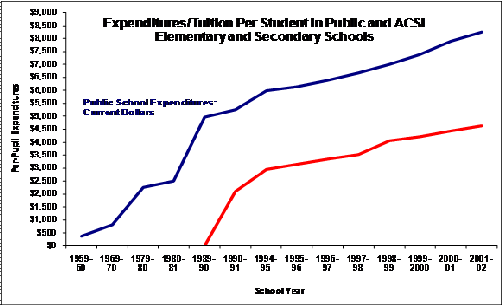
Public school per pupil expenditures for the 2001-02 school year averaged $8,259. By comparison, tuition per pupil in ACSI member schools in the same year averaged $4,642, a difference of $3,617/student . The figure below illustrates per pupil expenditures in public and ACSI member schools.

clip_image003

Sources: U.S. Department of Education, National Center for Education Statistics, current expenditure per pupil in average daily attendance in public elementary and secondary schools, by state or jurisdiction: Selected years, 1959-60 to 2001-02. http://nces.ed.gov/programs/digest/d04/tables/dt04_168.asp. Association of Christian Schools International (ACSI) 1990-01 to 2001-02. By using non-tuition revenue, such as fund raising and church subsidies, actual per student expenditures are higher than tuition levels may indicate. In many Christian schools, tuition levels are set below the actual cost to educate.

This 44% differential is “funded” by paying below market compensation, through fundraising and/or church subsidies, by offering programs of limited scope and marginal quality, and/or by incurring debt.

From Cartoonstock.com

Cartoon from Cartoonstock

Many Christian schoolteachers bear the burden of subsidizing below cost tuition rates through low salaries and poor benefits. Sixty-eight percent of teachers employed in ACSI member schools with at least 10 years of experience earn less than $30,000 per year, (Association of Christian Schools International, 2005). By contrast, statistics from the NCES (2002) show that the average starting salary for teachers with no experience in public charter schools that used a salary schedule was $26,977, compared with $25,888 for public school districts.

Education is a labor-intensive enterprise with labor costs typically representing 65 to 80 percent of a school’s entire operating costs, (William J. Fowler & Monk, 2001). The combination of below cost tuition and high labor costs results in artificially depressed salary levels making staffing the school with highly trained and competent teachers throughout the program difficult, especially at the secondary level.

image

Low salaries and poor benefits often produce high staff turnover creating discontinuity in the academic program. The applicant pool is small, forcing the administrator to hire the “best available” from a pool of relatively mediocre teachers. The result is poor to average instructional and academic quality, the loss of parental confidence, low student retention rates, especially at the upper school level, and a reputation for mediocre quality.

Many Christian leaders find themselves caught in a vicious and self-defeating cycle. Under funding produces poor quality, which in turn restricts enrollment levels and school revenue. To increase revenue, school leadership needs to raise tuition rates but many current and prospective parents do not believe that the school’s quality justifies the higher cost. Parents choose to leave or not to enroll their children in the school in the first place. In a desperate attempt to stem the loss of students or to stimulate enrollment, tuition continues to be set below actual cost thus perpetuating the cycle.

Supply and Demand

image

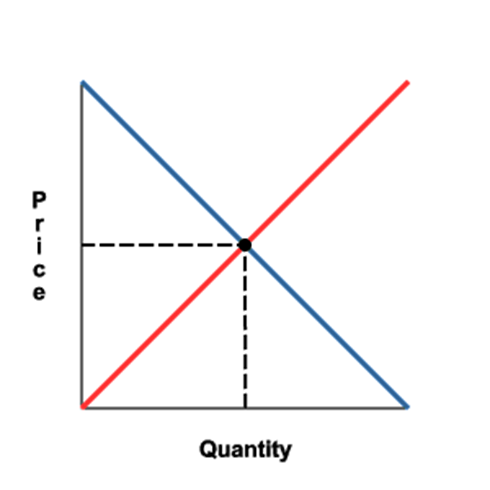
The theory of supply and demand is one of the most basic in economics. Simply stated, supply is the amount of product or service that a business or organization is willing or able to provide at a specified price. Demand is the amount of product or service that a consumer is willing to buy at a specified price, (International Society for Complexity Information and Design, n.d.). Modifying this definition for the Christian school market, the definition may read as follows; supply is the quality of education that a Christian school can provide at a specified tuition level while demand is the amount of tuition that parents are willing to pay for the perceived value of the education provided. Everything else being equal, demand (enrollment) will be strong when the market (parents) believe that the school provides a quality of education valued at equal to or above the tuition charged. If enrollment is stagnant or declining this is a sign that the market does not perceive the value offered to be equal to the tuition charged.

Common sense enough, but things are a bit more complex than the foregoing definition implies. To grasp more fully the economics of Christian schooling, two other economic principles need to be considered; price elasticity of demand and marginal value. Relax; this is not as bad as it sounds!

image

Elasticity refers to market sensitivity to price changes. Demand for very price elastic products or services will vary significantly based on price. Relatively small increases or decreases in price will have a significant impact on demand. On the other hand, demand for products and services that are price inelastic is relatively stable even with relatively wide swings in price. For example, farmers face a relatively inelastic market; modest increases or decreases in groceries have only a modest affect on consumer demand for staples. However, airfares are elastic; even slight price increases or decreases in airfare can dramatically affect ticket sales.

There are several factors that affect elasticity of demand (QuickMBA, 2004):

· Availability of substitutes, the more possible substitutes, the greater the elasticity,

· Degree of necessity or luxury: luxury products tend to have greater elasticity. Some products that initially have a low degree of necessity are habit forming and can become "necessities" to some consumers, e.g., the microwave and the cell phone.

· Proportion of the purchaser's budget consumed by the item: products that consume a large portion of the purchaser's budget tend to have greater elasticity.

For the Christian school this means that, other factors being constant, the availability of schooling options in the community will affect the administration’s ability to increase enrollments and what can be charged for tuition. The more options, the more elastic tuition rates will be. Likewise, the fewer alternatives that parents have, the less elastic tuition will be.

The quality of alternative educational options will also affect tuition elasticity. If area public and private schools are considered poor relative to the local Christian school, enrollment in the Christian school may be perceived as more of a necessity than it will be if the community is blessed with a large number of high quality public and private schools. In the latter case, parents have a smorgasbord of quality educational options. If parents perceive the local public schools to be safe, high quality learning environments, they are more likely to consider enrollment in the Christian school to be a discretionary “luxury” purchase. Only the most diehard adherents to a Christian philosophy of education will consider enrollment in the Christian school a necessity. If on the other hand, local schools are perceived to be unsafe and of poor quality, “purchasing” a Christian education is more likely to be considered a necessity, making tuition levels less elastic.

The Archdiocese of Chicago provides a compelling example of this principle. Faced with declining enrollments and a school deficit of $20 million, the Archdiocese commissioned a study to determine how to boost school enrollment. Boffetti (n.d.) reports that researchers discovered that:

Struggling schools, at the very least, needed to fill every available seat with tuition-paying students. Surprisingly, many inner-city parents, both Catholic and non-Catholic alike, did not know that Catholic education would only cost them $1,000 a year, with the diocese picking up the rest of the tab. When they learned the facts, many said they would eagerly pay to get their children out of the awful and dangerous public schools they were in.

image

Suburban parents were more sanguine. Parents who believed in the importance of Catholic education already sent their children to Catholic schools. The rest of the parents did not think it would be worth the added expense because they felt that their suburban public school system was at least equal to, if not better than, the Catholic schools in terms of academics and amenities [emphasis added]. In other words, the “Catholic” in Catholic education was not worth an extra $1,000 per year to them. (pp. 7-8)

Marginal Value

image

A closely related concept to elasticity is marginal value. Simply stated, marginal value is the amount of benefit perceived by purchasing an additional “unit” of a product or service in terms of other goods or services. Several factors influence marginal value: price and perceived value being among the most important. Brimley and Garfield (2002) define the marginal dollar (a way of understanding marginal value) as the dollar that would be better spent for some other good or service. In other words, as applied to the Christian school, marginal value or the marginal dollar can be understood as the calculation that parents make that an incremental increase in tuition, either at the school their children currently attend or at competing schools, is worth more than say a nicer home, car, or vacation. That is, as tuition increases, parents make a calculation that the added cost is or is not producing an incremental value equal to or greater than the increase in cost relative to other educational options and other purchases. If parents do not perceive the quality of education provided to be of more value than other options, parents will choose those options.

The impact of marginal value calculations made by parents is seen in the typical attrition rate from junior to senior high common in many Christian schools. Many parents conclude that the added cost of four years of Christian schooling is not justified relative to the breadth of programs offered by local high schools.

The reflex response by many school leaders is to assume that the way to increase the marginal value of their schools is to keep tuition low. This is certainly an important element in maintaining value. Another approach, however, is to increase the incremental value of the education provided relative to tuition charged by improving quality, expanding programs, hiring better teachers, and enhancing facilities. In other words, value can be increased by giving parents more for their tuition dollars. The balance between quality and cost produces a perceived value; it is perceived value relative to other educational options and other purchases that determines the willingness of parents to purchase a “Pearly Gates Christian School” education for their children.

Strategic Budgeting for Marginal Value

image

There are many ways to increase a Christian school’s marginal value: three of the most important are:

  • Hiring superior teachers,

  • Effective integration of technology, and

  • Careful stewardship of existing funds.

To accomplish these goals school leadership should engage in strategic budgeting in contrast to default budgeting. Default budgeting is budgeting based on current realities, existing exigencies, and existing allocations. By contrast, strategic budgeting aligns planned expenditures to strategic initiatives designed to enhance marginal value. Leadership allocates funds based on the school’s strategic plan, not merely on existing spending patterns.

Strategic Budgeting: Personnel

For example, because a school is only as good as its teachers, one of the most powerful ways to increase marginal value is to establish a long-term plan to enhance the school’s ability to recruit, hire, and retain superior teachers by offering competitive salaries and benefits. To accomplish this goal, prayerful, strategic, and sometimes hard decisions have to be made concerning the existing allocation of resources. Are there personnel who need to be let go? Are there curriculum offerings that need to be dropped? Are there programs that need to be eliminated or reduced?

image

image

Suppose the school offers a home economics course. The administration may have established this course several decades ago because it met a need at the time. This course is assigned a teacher and allocated resources. However, there are only 30 students enrolled out of a total of 500 high school students. Given cultural changes, marginal value would be increased by eliminating this class and allocating the funds for a media literacy or graphics design course. Such a course would serve a greater number of students and would increase the value parents are receiving for their tuition dollar.

Reevaluating the standard salary scale is another example of strategic budgeting. The basic idea is to create salary ranges designed to differentiate pay based on market supply and demand. Under such a plan there may be different compensation ranges for different classifications of teachers, e.g., for scarce specialty teachers and personnel such as advanced math and science teachers or technology specialists.

The idea of creating differentiated salary ranges whereby certain teacher classifications are paid more than others is counterintuitive for most educators. Educated and trained in a system in which teacher salaries are based on experience and credentials, regardless of competence and market conditions, is deeply ingrained in the psychology of school leadership and in the structure of schooling.

image

However, to put differentiated pay into a larger context, it is helpful to note the following research findings as reported by the Educational Research Service’s report, Teacher Compensation and Teacher Quality (Goldhaber & Eide, 2003).

Current teacher quality and staffing issues have affected some subject areas more than others. For example, studies have shown that teachers of math and science have some of the highest levels of attrition among all teachers. Additionally, some schools face teacher quality issues with the math and science teachers who do remain in the classroom….

The fact that teacher shortage and teacher quality issues affect math and science especially severely can be explained with the teacher labor market and the single-salary schedule. Lakdawalla (2000) found that the returns to technical skills have outpaced the returns to teaching skills. Teachers with math and science skills are most likely to be able to have high-paying technical jobs as viable career alternatives. This means that the opportunity cost for math and science teachers has grown more than the opportunity cost for all other teachers….

We find that the shortage for math teachers is greater than that for history teachers, because the wages of teachers are inflexible. Thus, schools will have more difficulty hiring math teachers with an adequate level of training and also face greater levels of attrition in the current math teacher labor force….

Goldhaber highlights the severity of the problem of finding and retaining highly qualified math and science teachers for most schools…

This leaves schools with difficult choices and challenges. They could procure and devote unprecedented amounts of money toward teacher compensation [or] differentiate salaries by teacher skills…[emphases added]

It is quite likely that schools will have to raise compensation for math and science teachers in order to compete with the private sector and attract individuals with technical expertise in those areas. The above point suggests a need to restructure teacher compensation and move away from the single-salary schedule…and should include concepts such as the supply and demand for particular teacher skills. (pp. 38-52)

When assessing teacher compensation, it must be borne in mind that money is not the primary motivator for teachers. If it were, many would have chosen a different profession. Hiring teachers intrinsically and passionately committed to the ministry of Christian education is critically important to ensuring that teachers are kingdom rather than self focused.

Nevertheless, the “workman is worthy of his hire.” Creating differentiated pay ranges has the benefit of positioning the school to recruit and retain the finest faculty available while not requiring the uniform and universal raising of all salaries. The result is that the school is able to attract advanced science and math teachers while simultaneously avoiding the large tuition increases that would result from adjusting the entire salary scale upward. It also enhances the marginal value of the school by increasing quality and minimizing tuition increases.

Strategic Budgeting: Technology Integration

image

Leadership can significantly enhance marginal value by enriching the academic program through integrated instructional technology. The key concept is integrated. The vast majority of both ACSI and CSI member schools offer computer classes. Very few integrate the technology into daily instruction.

Technology integration means that technology is an instructional tool, not merely a subject of instruction. Integrated technology is the seamless infusion of technology in both instruction and learning so that technology becomes a ambiguous tool used by both students and teachers. It goes beyond computer labs to the natural incorporation of technology into teaching and learning as naturally as a white board and notebook. Using technology for the sake of using technology is not the objective. The objective is to use technology to enhance teaching and learning when it is the most effective way to teach and to learn. Technology is not the end; it is the means.

The following abridged example of technology integration for a high school class illustrates the concept. Although designed for high school, this lesson could be easily modified for junior high students.

Lesson objective: Students will deepen their understanding of the relationships between social and human capital and the creation of wealth in a first and third world country.

Lesson Content and Assignment:

· The teacher will provide background reading and lectures on social and human capital, biblical concepts of economic justice, fundamental principles of economics, and the impact of educational attainment on the creation of individual and national wealth.

· Students are to use library and Internet-based resources to research economic, demographic, and educational data for both a first and third world country using resources just as the CIA Fact Book, the Library of Congress, the U.S. Census, the World Bank, International Monetary Fund, etc.

· Data is to be collected using an Access database. Students will export the data to an Excel spreadsheet. Graphs are to be created depicting important data. Working with the math department, students will run a simple correlation analysis using Excel or a program such as SPSS.

· Students will use Word to write an eight-page research report. The report is to include embedded Excel charts and graphs. The report is to be in MLA format using Endnote for the citation of references and the creation of the reference section. This written report is to provide a discussion of biblical principles of social justice, a summary of research findings, and conclusions regarding the relationship between social and human capital to the creation of wealth in a first and third world country. Students are then to answer the following question: “What does this mean to me?”

· Students will use PowerPoint to present a five-minute summary of their findings.

Assessment:

· Students will be assessed using both a traditional assessment (test) and an authentic assessment. The authentic assessment is the quality of the research, the quality of the written report, the quality of technology use and integration, and the quality of their presentations. The teacher will use a rubric to evaluate the authentic assessment.

A useful middle school example is Was It Murder? The Death of King Tutankhamun: The Boy King. This lesson can be found at the following Internet site: http://www.pekin.net/pekin108/wash/webquest/.

Unfortunately, there is little evidence that Christian schools are integrating technology in a manner even close to the lessons described above. In a national study designed to assess the current level of technology access and integration, defined as Technology Level, in CSI and ACSI schools, Mosbacker (2005) found that the majority of CSI and ACSI schools are not characterized by the level of technology integration required to prepare students with the 21st century skills needed in an information-rich, global economy.

The majority of the schools are at a relatively low technology level as measured by the CEO STaR Chart definitions. The STaR Chart is one of the most comprehensive categorizations of schools based on their level and use of the technological resources. The CEO Forum’s STaR Chart identifies and defines four school profiles ranging from the school with “Early Technology” to the “Target Technology” school characterized by integrated technology throughout the curriculum. The STaR Chart also matches potential educational outcomes — the potential benefits — to the level of technology and integration in each profile category. Based on technology presence and integration throughout the curriculum, the STaR Chart provides a technology snapshot of a school in each of the profile categories.

Most CSI and ACSI schools provide access to technology, there is little curricular integration.

Consequently, the majority of the schools are at a relatively low technology level with 77% of the schools defined as Low to Mid Technology. Twenty two percent of the schools are classified as High/Advanced Technology schools and only one school is classified as a Target Technology school.

Many parents will immediately perceive an increase in marginal value through the addition of integrated technologies. For this to become a reality, leaders will need to develop strategic budgets that fund the necessary hardware, software, and staff training, the latter being particularly important. Simply adding the funds for technology development without a strategic review of the existing budget may increase total cost unnecessarily. Realizing increases in marginal value will require reassessing current budget allocations and may require eliminating or reducing other expenditures in order to fund technology development without adding significantly to tuition. A combination of strategic budgeting and fundraising for technology purchases can make technology affordable while improving marginal value to parents.

Strategic Budgeting: Strategic Allocations

An important way to increase marginal value is to control cost by the prayerful and careful use of the resources entrusted to our care—stewardship. Jim Collins (2001) provides a poignant example of stewardship from the corporate world.

When we interviewed Ken Iverson, he told us that nearly 100 percent of the success of Nucor was due to its ability to translate its simple concept into disciplined action consistent with the concept. It grew into a $3.5 billion Fortune 500 company with only four layers of management and a corporate staff of fewer than twenty-five people—executive, financial, secretarial, the whole shebang—crammed into a rented office the size of a small dental practice. Cheap veneer furniture adorned the lobby…instead of a corporate dining room, executives hosted visiting dignitaries at Phil’s Diner, a strip mall sandwich shop across the street [emphasis added]. (p. 136)

Twenty-five members of a corporate staff to run a $3.5 billion dollar company is, by any measure, good stewardship! Look around. Has the school incrementally added more and more staff as it has grown? Is it necessary to have such a large staff? Can things be done more efficiently, for example, by utilizing administrative computing system more effectively and through better staff training? One method to assess staffing levels is to compute the total number FTE (full-time equivalent) employees to students. If that ratio is consistently increasing, it may indicate excessive staffing levels.

Being cheap is not equivalent to wise stewardship. Increased value and marginal return on the investment are the marks of wise stewardship. Being “cheap” does not promote excellence nor does it add marginal value. The wise use of resources through the strategic allocation of scarce resources does both. Excellence is promoted by allocating funds to strategic initiatives designed to enhance value and expand programs, e.g., hiring better teachers and/or developing integrated technologies.

Strategic allocation is no more complex than seeking the “biggest bang for the buck.” What will produce the greatest educational return on investment for the dollar spent? The concept of marginal return complements the concepts of marginal utility and marginal value.

Although a financial concept, marginal return, as applied to the present context, can be thought of as the return or impact on the school that is realized for the dollars invested.

For example, if a school has been given an undesignated gift of $50,000, the question is; where will that $50,000 dollars produce the greatest results? Should it be spent on new textbooks? Will buying new computers or science equipment produce a higher educational return for parents than spending the funds for a new bus or designating the funds for financial aid?

image

It is notoriously difficult to quantify the marginal return in the educational context. Nevertheless, carefully aligning expenditures to a strategic plan will increase the impact (return) for every dollar invested. The problem is that pressing short-term needs or pressure from parents often trumpets the strategic allocation of tuition revenue and financial gifts. Rather than allocating the funds based upon a strategic plan or upon a careful assessment of what will add the most marginal value for parents, many leaders spend the funds to cover short-term needs or to placate the loudest constituency.

Stewardship

If our schools are to survive, much less thrive, we must stop "spreading the peanut butter too thin." We need to think far more strategically. Where should we place our resources? What is the basis for our decision? What programs should we eliminate? What programs should we add? The the marginal value of our schools been stagnant or declining?

These are important questions that we must answer with ruthless honesty.

Technorati Tags:

Economics

,

Marginal Value

,

Private School

,

Christian School

,

Christian School Enrollment

,

Technology Integration

,

Staff Pay

,

Staff Compensation

,

Teacher Pay

,

Value

,

ROI

,

Excellence

,

Survive

,

Thrive

Welcome to the Library. Say Goodbye to the Books

By Dr. Barrett Mosbacker

Things are changing!  For many years e-books have resided in the back waters of publishing.  Early adopters and gadget freaks have read them but the vast majority of the population were either unaware of them or didn’t care.

Kindle DX: Amazon's New Addition To the Kindle Family

The lowly status of the e-book may be about to change—and radically.  David Weir, in a BNET (a business and management blog) article outlines five reasons why he believes e-book publishing and use is reaching their tipping point--becoming widely accepted and on the way to outpacing printed books in popularity.

1.  Screen reading now rivals paper reading, and for those of us in the over 40 set, screen reading is often easier on the eyes thanks to adjustable font sizing.

2.  Consumer awareness has increased dramatically.  A year ago, consumers were skeptical and resistant to e-books.  Today, consumers are doing a complete 180.  The early adopters have celebrated their Sony Readers, Kindles and iPhones to their friends, and now their friends want in.

3.  The amount of content is increasing.  Free books have served as a gateway drug to many early adopters.

4.  Ebooks are impulse buys.  I met a guy at the Las Vegas airport last month who told me he purchased a Sony Reader so he wouldn’t have to lug around 20 pounds of technical manuals.  Now he finds himself buying more fiction than ever before because it’s so easy and convenient.

5.  Value.  E-books are cheaper.

My Personal Experience

I love books.  My study is wall to wall books and I have spent thousands of dollars on my traditional library.  I love to read and I love the feel and smell of books.

img_0002

Nevertheless, my reading habits are changing.  In fact, I recently finished reading Dr. Poythress’ excellent book, Redeeming Science (384 pages) on my iPhone version of the Kindle (Read a review: Amazon launches Kindle application for the iPhone).

After reading Dr. Poythress’ book on my iPhone, I have concluded that I would love to have the Kindle DX for the vast majority of my reading.  In fact, I would like to duplicate my printed library on the Kindle.

Hint to my wife: great Christmas present!

Although there are some drawbacks to e-books/e-readers relative to printed books (mainly sentimental), the advantages are numerous including:

1. The ability to read books, newspapers, magazines, and blogs anywhere anytime without the need to carry large books and dirty newspapers.  The Kindle DX for example is just over 1/3 of an inch, as thin as most magazines.  This is particularly an advantage when traveling or when in waiting rooms.

2. The ability to literally carry a library in my pocket or laptop case.  I could carry to 3,500 books, periodicals, and documents in the Kindle DX.

3. For those of us who are a little older, the ability to adjust font size is a big advantage (yes, pun was intended).  The Kindle DX has a 9.7" diagonal e-ink screen and reads like real paper and boasts 16 shades of gray for clear text and sharp images.  Additionally, the device has a display that auto-rotates from portrait to landscape as you turn the device so you can view full-width maps, graphs, tables, and Web pages.

4. I can read PDF documents enabling me to read my personal and professional documents on the go.

5. With wireless 3G I can download books and magazine to the Kindle DX anytime, anywhere; there are no monthly fees, no annual contracts, and no hunting for Wi-Fi hotspots.

6.  Currently, Amazon has over 300,000 e-books;many of which are only $9.99.

7. I can have subscriptions to U.S. and international newspapers including the New York Times and Wall Street Journal (both of which I read), magazines including The New Yorker and Time, plus popular blogs, all auto-delivered wirelessly.

house_on_fire

8. I could have an electronic backup of my library.  If there a fire in my house, I would find it hard and probably impossible to replace many of my out of print books.  If my library was on the Kindle, I could re-download my library from Amazon, Project Gutenberg, etc.

According to the Kindle Review, a lot of the books available at Project Gutenberg are already available in Kindle .azw format at ManyBooks (if you’re using your laptop). There are 19,505 eBooks available at ManyBooks and they’re all free! When you get to the page for an individual book, just click on the dropdown at the top right that says ‘Free Download’ + ‘ Select Format’ and the FIRST option is Kindle.

Note: You can browse and download Manybooks on the Kindle. @ mnybks.net

For Project Gutenberg books that are not available at ManyBooks, you can go to the Project Gutenberg Website. You can download EVERY book on Gutenberg to your Kindle for Free. No conversion required. This is a good page to start at Project Gutenberg to get Free Kindle eBooks.

Potential for Our Schools

I am not prepared to go as far as Cushing Academy (see below) but I am reviewing the potential of using Kindles, netbooks, and other electronic devices to supplement our library and textbooks.  One of the great advantages for our students would be that they would not have to carry heavy book bags around all day.

Welcome to the library. Say goodbye to the books.

Cushing Academy embraces a digital future

By David Abel, Globe Staff  |  September 4, 2009

Boston prep school nixes all the books in its library, replaces them with 18 e-readers

ASHBURNHAM - There are rolling hills and ivy-covered brick buildings. There are small classrooms, high-tech labs, and well-manicured fields. There’s even a clock tower with a massive bell that rings for special events.

Cushing Academy has all the hallmarks of a New England prep school, with one exception.

This year, after having amassed a collection of more than 20,000 books, officials at the pristine campus about 90 minutes west of Boston have decided the 144-year-old school no longer needs a traditional library. The academy’s administrators have decided to discard all their books and have given away half of what stocked their sprawling stacks - the classics, novels, poetry, biographies, tomes on every subject from the humanities to the sciences. The future, they believe, is digital.

“When I look at books, I see an outdated technology, like scrolls before books,’’ said James Tracy, headmaster of Cushing and chief promoter of the bookless campus. “This isn’t ‘Fahrenheit 451’ [the 1953 Ray Bradbury novel in which books are banned]. We’re not discouraging students from reading. We see this as a natural way to shape emerging trends and optimize technology.’’

Instead of a library, the academy is spending nearly $500,000 to create a “learning center,’’ though that is only one of the names in contention for the new space. In place of the stacks, they are spending $42,000 on three large flat-screen TVs that will project data from the Internet and $20,000 on special laptop-friendly study carrels. Where the reference desk was, they are building a $50,000 coffee shop that will include a $12,000 cappuccino machine.

And to replace those old pulpy devices that have transmitted information since Johannes Gutenberg invented the printing press in the 1400s, they have spent $10,000 to buy 18 electronic readers made by Amazon.com and Sony. Administrators plan to distribute the readers, which they’re stocking with digital material, to students looking to spend more time with literature.

Those who don’t have access to the electronic readers will be expected to do their research and peruse many assigned texts on their computers.

“Instead of a traditional library with 20,000 books, we’re building a virtual library where students will have access to millions of books,’’ said Tracy, whose office shelves remain lined with books. “We see this as a model for the 21st-century school.’’

Not everyone on campus is sold on Tracy’s vision.

They worry about an environment where students can no longer browse rows of voluptuous books, replete with glossy photographs, intricate maps, and pages dog-eared by generations of students. They worry students will be less likely to focus on long works when their devices are constantly interrupting them with e-mail and instant messages. They also worry about a world where sweat-stained literature is deemed as perishable as all the glib posts on Facebook or Twitter.

Liz Vezina, a librarian at Cushing for 17 years, said she never imagined working as the director of a library without any books.

“It makes me sad,’’ said Vezina, who hosts a book club on campus dubbed the Off-line Readers and has made a career of introducing students to books. “I’m going to miss them. I love books. I’ve grown up with them, and there’s something lost when they’re virtual. There’s a sensual side to them - the smell, the feel, the physicality of a book is something really special.’’

Alexander Coyle, chairman of the history department, is a self-described “gadget freak’’ who enjoys reading on Amazon’s Kindle, but he has always seen libraries and their hallowed content as “secular cathedrals.’’

“I wouldn’t want to ever get rid of any of my books at home,’’ he said. “I like the feel of them too much. A lot us are wondering how this changes the dignity of the library, and why we can’t move to increase digital resources while keeping the books.’’

Tracy and other administrators said the books took up too much space and that there was nowhere else on campus to stock them. So they decided to give their collection - aside from a few hundred children’s books and valuable antiquarian works - to local schools and libraries.

“We see the gain as greater than the loss,’’ said Gisele Zangari, chairwoman of the math department, who like other teachers has plans for all her students to do their class reading on electronic books by next year. “This is the start of a new era.’’

Cushing is one of the first schools in the country to abandon its books.

“I’m not aware of any other library that has done this,’’ said Keith Michael Fiels, executive director of the American Library Association, a Chicago-based organization that represents the nation’s libraries.

He said the move raises at least two concerns: Many of the books on electronic readers and the Internet aren’t free and it may become more difficult for students to happen on books with the serendipity made possible by physical browsing. There’s also the question of the durability of electronic readers.

“Unless every student has a Kindle and an unlimited budget, I don’t see how that need is going to be met,’’ Fiels said. “Books are not a waste of space, and they won’t be until a digital book can tolerate as much sand, survive a coffee spill, and have unlimited power. When that happens, there will be next to no difference between that and a book.’’

William Powers, author of a forthcoming book based on a paper he published at Harvard called “Hamlet’s Blackberry: Why Paper is Eternal,’’ called the changes at Cushing “radical’’ and “a tremendous loss for students.’’

“There are modes of learning and thinking that at the moment are only available from actual books,’’ he said. “There is a kind of deep-dive, meditative reading that’s almost impossible to do on a screen. Without books, students are more likely to do the grazing or quick reading that screens enable, rather than be by themselves with the author’s ideas.’’

Yet students at Cushing say they look forward to the new equipment, and the brave new world they’re ushering in.

Tia Alliy, a 16-year-old junior, said she visits the library nearly every day, but only once looked for a book in the stacks. She’s not alone. School officials said when they checked library records one day last spring only 48 books had been checked out, and 30 of those were children’s books.

“When you hear the word ‘library,’ you think of books,’’ Alliy said. “But very few students actually read them. And the more we use e-books, the fewer books we have to carry around.’’

Jemmel Billingslea, an 18-year-old senior, thought about the prospect of a school without books. It didn’t bother him.

“It’s a little strange,’’ he said. “But this is the future.’’

How to Turn Thermometers into Thermostats

By Dr. Barrett Mosbacker

Take away from me the noise of your songs; to the melody of your harps I will not listen. But let justice roll down like waters, and righteousness like an ever-flowing stream. (Amo 5:23-24)

Thermostat_Temperature_Thermometer

As we consider our mission as Christian school teachers and leaders, and reflecting on the BCS Mission “to… equip each student to glorify God by responsible action in contemporary society” the question arises, “are our students thermometers of culture or thermostats?”  I fear that too many of our students (a nd too many of us) are thermometers, merely reflecting the moral temperature of our culture rather than changing it.

You are the salt of the earth, but if salt has lost its taste, how shall its saltiness be restored? It is no longer good for anything except to be thrown out and trampled under people's feet. You are the light of the world. A city set on a hill cannot be hidden. Nor do people light a lamp and put it under a basket, but on a stand, and it gives light to all in the house. In the same way, let your light shine before others, so that they may see your good works and give glory to your Father who is in heaven.  (Mat 5:13-16)

Reflecting on the compelling need by God’s grace to help our students become thermometers rather than thermostats, I am reminded of Martin Luther King Jr.’s words in his Letter from Birmingham Jail:

There was a time when the church was very powerful--in the time when the early Christians rejoiced at being deemed worthy to suffer for what they believed. In those days the church was not merely a thermometer that recorded the ideas and principles of popular opinion; it was a thermostat that transformed the mores of society. Whenever the early Christians entered a town, the people in power became disturbed and immediately sought to convict the Christians for being "disturbers of the peace" and "outside agitators"' But the Christians pressed on, in the conviction that they were "a colony of heaven," called to obey God rather than man. Small in number, they were big in commitment. They were too God-intoxicated to be "astronomically intimidated." By their effort and example they brought an end to such ancient evils as infanticide and gladiatorial contests…

How do we help our students/children become thermostats rather than mere thermometers?

1) PRAY—only God can change minds and hearts: “So neither he who plants nor he who waters is anything, but only God who gives the growth.” (1Co 3:7)

2) Study God’s word as we cannot be holy vessels without it and we cannot give what we do not possess: “Sanctify them in the truth; your word is truth.” (Joh 17:17); “Do not be conformed to this world, but be transformed by the renewal of your mind, that by testing you may discern what is the will of God, what is good and acceptable and perfect.” (Rom 12:2)

3) Be relevant—meet students where they are and then, in love, share the application of God’s word with them—but not always didactically.  Have your students wrestle with current and difficult political, scientific, moral issues—don’t spoon feed—teach them how to cook and how to eat, using God’s word as the recipe.

4) Be steadfast and patient—“ And let us not grow weary of doing good, for in due season we will reap, if we do not give up. So then, as we have opportunity, let us do good to everyone, and especially to those who are of the household of faith.” (Gal 6:9-10)  “Be patient, therefore, brothers, until the coming of the Lord. See how the farmer waits for the precious fruit of the earth, being patient about it, until it receives the early and the late rains.” (Jas 5:7)

It seems wholly appropriate on MLKJ Day to reread Martin Luther King Jr.’s Letter from Birmingham Jail.  Setting aside any and all political considerations, there is much to commend this letter.  I recommend that you reread it in its entirety if you have not done so recently.

U.S. Schools Are Still Ahead—Way Ahead?

ahead_race_win_run_achievement

By Dr. Barrett Mosbacker

Want some good news?  According to the article posted below (Bloomberg Businessweek, January 12, 2011), contrary to what we read in the media, U.S. students and s chools are way ahead of their foreign counterparts.  This article makes essentially the same argument that Yong Zhao makes in his excellent book, Catching Up or Leading the Way: American Education in the Age of Globalization

These positive assessments of American education contrast sharply with Friedman’s The World is Flat, 2 Million Minutes, statements by Bill Gates, and a host of other reports and books. 

I am going to email Bill Gates and Thomas Friedman to see if they have a reaction to this report.  IF, A BIG IF, I get a response, I’ll let you know.

What do you think?

U.S. Schools Are Still Ahead—Way Ahead

America's alarm about international rankings of students overlooks some critical components of our education system, Vivek Wadhwa says

By Vivek Wadhwa

America has an inferiority complex about its education system. You hear the sirens every year, when the OECD Program for International Student Assessment (PISA) releases its annual test results. Finland, South Korea, and Singapore usually come out on top; we start blaming our K-12 teachers for not teaching enough mathematics and science; we begin worrying about the millions of engineers and scientists China and India graduate.

This year the big surprise was that Shanghai garnered first place in the PISA rankings. Then The Wall Street Journal ran a story on the home page of its website titled "Why Chinese Mothers Are Superior." The Journal article claimed that Chinese (and Korean, Indian, etc.) parents raise "stereotypically successful kids"—math whizzes and music prodigies. They do this by not allowing their children to attend sleepovers; have a playdate; be in a school play; complain about not being in a school play; watch TV or play computer games; choose their own extracurricular activities; get any grade less than an A; not be the No. 1 student in every subject except gym and drama. The article went on to recount as typical a series of acts that would be considered child abuse in the U.S. (and aren't the norm in India and China).

The Journal article was simply bizarre, yet it is true that education in China and India is very challenging and fiercely competitive. Children are brought up to believe that education is everything, that it will make the difference between success and starvation. So from their early years they work long and hard. Most of their childhood is spent memorizing books on advanced subjects.

American Stereotypes

Meanwhile, the perception is that American children live a relatively easy life and coast their way through school. They don't do any more homework than they have to; they spend an extraordinary amount of time playing games, socializing on the Internet, text-messaging each other; they work part time to pay for their schooling and social habits. And they party. A lot. These stereotypes worry many Americans. They believe the American education system puts the country at a great disadvantage. But this is far from true.

The independence and social skills American children develop give them a huge advantage when they join the workforce. They learn to experiment, challenge norms, and take risks. They can think for themselves, and they can innovate. This is why America remains the world leader in innovation; why Chinese and Indians invest their life savings to send their children to expensive U.S. schools when they can. India and China are changing, and as the next generations of students become like American ones, they too are beginning to innovate. So far, their education systems have held them back.

My research team at Duke looked in depth at the engineering education of China and India. We documented that these countries now graduate four to seven times as many engineers as does the U.S.The quality of these engineers, however, is so poor that most are not fit to work as engineers; their system of rote learning handicaps those who do get jobs, so it takes two to three years for them to achieve the same productivity as fresh American graduates.As a result, significant proportions of China's engineering graduates end up working on factory floors and Indian industry has to spend large sums of money retraining its employees. After four or five years in the workforce, Indians do become innovative and produce, overall, at the same quality as Americans, but they lose a valuable two to three years in their retraining.

Rankings Reconsidered

And then there is the matter of the PISA rankings that supposedly show the U.S. trailing the rest of the world. Hal Salzman, a professor at Rutgers' John J. Heidrich Center for Workforce Development, debunked myths about these in a May 2008 article in Nature magazine. Salzman noted that international tests use different sampling criteria from country to country, so we're not always comparing apples to apples. As well, the tests compare select populations of small countries such as Singapore and Finland, which each have about 5 million people, with the U.S., which has 310 million. These countries achieve the top rankings on the PISA list. Compare these countries to similar-sized U.S. states, however, and you find that some of those states, including Massachusetts (population 6.5 million), produce the top students. Additionally, we're comparing America's diverse population—which includes disadvantaged minorities and unskilled immigrants with little education—with the homogeneous populations of countries like Finland, Japan, and New Zealand.

Much is made of the PISA test scores and rankings, but the international differences are actually quite small. Most of the U.S. ranking lags are not even statistically significant. The U.S. falls in the second rank on some measures and into the first on others. It produces more highest-performing students in science and reading than any other country does; in mathematics, it is second only to Japan. Moreover, one has to ask what the test results actually mean in the real world. Do high PISA rankings make students more likely to invent the next iPad? Google (GOOG)? I don't think so.

Let's keep improving our education system and focus, in particular, on disadvantaged groups. Education is the future of our nation. But let's get over our inferiority complex. America is second to none. Rather than in mastery of facts learned by rote and great numbers of accomplished martinets, its strength lies in the diversity and innovation that arise in an open, creative society.

Wadhwa is a visiting scholar at University of California-Berkeley, senior research associate at Harvard Law School, and director of research at the Center for Entrepreneurship and Research Commercialization at Duke University. Follow him on twitter—@vwadhwa .

Xerox Color. It makes business sense.

A Mentoring Approach to Leadership Development

Advance Christian Schools - A Mentoring approach to leadership development

By Harold Naylor

Christian schools have the opportunity to be premier institutions of redemptive education.  However, many schools are struggling with enrollment declines, financial stresses and an inability to maintain their zeal for their Kingdom mission. Advance Christian Schools (ACS) is a ministry to Christian schools that employs a long-term coaching and mentoring approach in working with school leadership, rather than the more typical one-time consulting approach.

"Our goal is to help restore the educational excellence and worldview clarity of early Christian schools" says Harold Naylor, founder and co-director.  Dr. Sandy Outlar and Dr. Alan Pue are co-directors and bring decades of experience to this process.  "We will assist schools by using an experienced and godly team of coaches to mentor school leaders in a one-year relationship to provide instruction with accountability", Sandy explains.  The mentored school will have access to the best person-to-person help plus access to a comprehensive Knowledge Base in the realm of Christian school thinking, practice and innovation.

The aim of Advance Christian Schools is to glorify God by employing this biblical approach along with experience for a resurgence of the Christian schooling movement.

For more information, go to www.AdvanceChristianSchools.com

Fast Facts About Online Learning: I Do The Research So You Don't Have To

By Dr. Barrett Mosbacker

I have been reviewing a substantial body of research and attending national conferences as I formulate the theological, technological, financial, and marketing framework for a distance learning program at Briarwood Christian School.

I like to share the fruits of my labor with my readers.  Here is a summary of some of the research on distance learning that you may useful.

It has been said that “a picture is worth a thousand words.”  With that in mind, I am providing several charts that provide a useful snapshot of the status of distance learning in the U.S.

This is important information because as I noted in previous articles (They Are Coming After Your Students and Said So! and Can We Keep Up with the Competition?) it is imperative that we work through the theological and pedagogical implications of distance learning as we position our schools for the realities of a dramatically changing educational landscape.

The Evergreen Education Group is the source (Evergreen Education Group. (2009). of Keeping Pace with K-12 Online Learning: An Annual Review of State-Level Policy and Practice. Evergreen, CO: Evergreen Education Group.) from which the graphics below are taken.

Growth of online learning charts

Where Students are Taking Online Classes

online education growth chart

Research, Trends and Statistics

K-12 Online Learning and Virtual Schools: Expanding Options

  • K-12 online learning is a new field consisting of an estimated $300 million market, which is growing at an estimated annual pace of 30% annually.

  • 45 of the 50 states, plus Washington D.C., have a state virtual school or online initiative, full-time online schools, or both.i

  • 24 states, as well as Washington, DC, have statewide full-time online schools.ii

  • Many virtual schools show annual growth rates between 20 and 45%.ii

  • 35 states have state virtual schools or state-led online programs. iii

  • As of January 2007, there were 173 virtual charter schools serving 92,235 students in 18 states.iv

  • 57% of public secondary schools in the U.S. provide access to students for online learning.v

  • 72% of school districts with distance education programs planned to expand online offerings in the coming year.vi

  • 14.2 million computers were available for classroom use in the nation’s schools as of the 2005-2006 school year. That works out to one computer for every four students.vii

Online learning in K-12 schools is growing explosively

  • There are an estimated 320,000 course enrollments in state virtual schools and 75,00 full-time students in full-time online schools in the U.S.ii

  • In 2000, there were 40,000-50,000 enrollments in K-12 online education.viii

  • Eduventures estimated 300,000 students participated in virtual learning in the 2002-2003 school year in the United States.ix

  • Alberta Online Consortium in Canada reported 4,766 enrollments in 2002-2003. In 2002-2003, NCES reported 328,000 distance education enrollments in K-12 public school districts.x

  • In 2008, Sloan Consortium reports that there are approximately 4 million college students are currently enrolled in fully online courses.xi

  • In 2006, the Sloan Consortium reported 700,000 enrollments in K-12 online learning. to read: According to the Sloan Consortium, the overall number of K-12 students engaged in online courses in 2007-2008, is estimated at 1,030,000. This represents a 47% increase since 2005-2006.xii

  • In 2006, Sloan Consortium reported there were 3.2 million postsecondary students in the United States that took at least one online course; this represents a 25% increase over the previous year.

  • In April 2006, Michigan became the 1 st state to require online learning for high school graduation. In 2008, Alabama added a high school graduation distance/online learning requirement ,as well. 80% of K-12 school districts cited “the course was otherwise unavailable” as the number one reason for offering courses at a distance. xiii

  • According to the 2009 Sloan Consortium report, K-12 school district administrators cited “offering courses not otherwise available at the school,” “meeting the needs of specific groups of students,” and “offering Advanced Placement or college-level courses” as the top three reasons they perceive online and blended courses to be important.xiv

  • Enrollment province-wide in British Columbia climbed from 17,000 students in 2006 to 33,000 students in 2007, according to Canada’s Ministry of Education statistics

  • When considering online education for students in rural communities who have either “access to only a limited number of course offerings in their public schools” or advanced students interested in taking courses for college credit, the public expresses considerable support. In these two instances, over 60 percent of respondents support public funding for online education.xv

Research Reports “As Good or Better”: Effective

According to NCREL Synthesis of New Research on K-12 Online Learning: xvi

  • Online Learning Expands Options: “The first impetus to the growth of K-12 distance education was an interest in expanding educational options and providing equal opportunities for all learners.” (p.7)

  • Online Learning Is Rapidly Growing: “Recent surveys show that K-12 online learning is a rapidly growing phenomenon.” (p.4)

  • Online Learning Is Effective: “Equal or Better”: “One conclusion seems clear: On average, students seem to perform equally well or better academically in online learning.” (p. 17)

  • Online Learning Training Improves Teaching: Teachers who teach online reported positive improvements in face-to-face, too. “Of those who reported teaching face-to-face while teaching online or subsequently, three in four reported a positive impact on their face-to-face teaching.” (p. 25)

Today’s Students

  • The Pew Internet Project reports “the Internet is an important element in the overall educational experience of many teenagers”:xvii

  • 87% of all youth between the ages of 12 and 17 use the Internet (21 million people).

  • 86% percent of teens, 88% of online teens, and 80% of all parents believe that the Internet helps teenagers to do better in school.

  • 85% of 17 year olds have gone online to get information about a college, university, or other school they were thinking about attending.

High School Reform and Redesign

  • Data suggest that in about six years 10 percent of all courses will be computer-based, and by 2019 about 50 percent of courses will be delivered online.xxi

  • 90% of the fastest growing jobs in the economy require a college degree.xxii

  • Over 40% of our nation’s high schools do not offer any AP courses. Many of these schools serve predominantly low-income and minority students.xxii

  • Virtual schools and online programs provide AP courses.

  • While only 44% of U.S. high school students studied a foreign language in 2002, learning a second or third foreign language is compulsory for students in the European Union and elsewhere.xxii

  • Virtual schools offer foreign language courses online that allow interactive communication and collaboration with students and teachers across state and national boundaries for 21st century learning.

  • 52% of middle school and 15% of high school mathematics teachers did not have a major or minor in mathematics and 40% of middle school and 11% of high school science teachers did not have a major or minor in science.xxiii

  • Virtual schools and online programs provide a range of courses such as science, math, foreign languages, electives and remedial courses with highly qualified teachers.

  • According to the Manhattan Institute, 70% of all students in public high schools graduate, and only 32% of all students leave high school qualified to attend four-year colleges.xiv

  • The high school graduation rate in the United States is 70%. High school drop-out rates in urban areas average 50%.xxv

  • Only 51% of all black students and 52% of all Hispanic students graduate, and only 20% of all black students and 16% of all Hispanic students leave high school college-ready.

  • According to recent research from the Silent Epidemic study, 47% said a major reason for dropping out was that “classes were not interesting” and they were “bored”; 88% of drop outs had passing grades.xxvi

  • The National Education Technology Plan recommended that every student have access to e-learning opportunities and every teacher have access to e-learning training.xxvii

  • Virtual schools and online learning can help provide equal access to rigorous courses for all students, reducing inequities that exist across the educational system.

  • Today 6,000 talented young people will drop out of school. xxvii

  • Today only 11 states require credits in a foreign language for students to graduate.xxvii

  • Today two-thirds of high school students will be bored in at least one class.xxvi

  • Today African American students are 14 percent of those in school, but only 7 percent of those taking Advanced Placement exams.xxvii

  • Today 15 million students who need mentors do not have them. Xxviii

  • 69 percent of the public say that they “would be willing to have a child [of theirs] go through high school taking some academic courses over the Internet.xxix

References

iNACOL. (2009). Fast facts about online learning. Washington DC: International Association for K-12 Online Learning (iNACOL).

i Keeping Pace with K-12 Online Learning 2009, Evergreen Consulting; www.KPK12.com

ii Keeping Pace with K-12 Online Learning 2009, Evergreen Consulting; www.KPK12.com

iii Keeping Pace with K-12 Online Learning 2009, Evergreen Consulting; www.KPK12.com

iv Center for Education Reform. (Note: There are 173 virtual charter schools with 92,235 students, up from 147 schools serving 65,354 students in 18 states in 2005-2006; 86 such schools with 31,000 students in 13 states in 2004-05; 60 schools in 13 states in 2002-03).

v Internet Access in U.S. Public Schools and Classrooms: 1994–2005, 2007. U.S. Department of Education. Washington, DC: National Center for Education Statistics. www.nces.gov.

vi Distance Education in Elementary and Secondary Public School Districts, 2005, U.S. Department of Education National Center for Educational Statistics. www.nces.ed.gov

vii Upcoming Statistical Abstract of the United States: 2009, Table 252 http://www.census.gov/compendia/statab/

viii Virtual Schools, 2001, Tom Clark/WestEd.

ix In 2002-2003, 4,766 students in Alberta, Canada were enrolled in online learning programs; up 1,000 from the previous year’s 3,810 students.

x Distance Education in Elementary and Secondary Public School Districts, 2005, U.S. Department of Education National Center for Educational Statistics. www.nces.ed.gov.

xi Staying the Course: Online Education in the United States, The Sloan Consortium, 2008. http://www.sloanc.org/publications/survey/pdf/staying_the_course.pdf

xii K–12 Online Learning: A 2008 Follow-up of the Survey of U.S. School District Administrators, Sloan Consortium, January 2009, http://www.sloan-c.org/publications/survey/pdf/k-12_online_learning_2008.pdf.

xiii Distance Education in Elementary and Secondary Public School Districts, 2005, U.S. Department of Education National Center for Educational Statistics. www.nces.ed.gov.

xiv K–12 Online Learning: A 2008 Follow-up of the Survey of U.S. School District Administrators, Sloan Consortium, January 2009, http://www.sloan-c.org/publications/survey/pdf/k-12_online_learning_2008.pdf.

xv “The 2008 Education Next-PEPG Survey of Public Opinion,” Fall 2008, (vol. 8, no. 4), http://www.hoover.org/publications/ednext/26380034.html.

xvi NCREL Synthesis of New Research on K-12 Online Learning, 2005, North Central Regional Education Laboratory/Learning Point Associates. www.ncrel.org/tech/synthesis/.

xvii The Internet at School, 2005, Pew Internet Study. www.pewinternet.org.

xviii Rates of Computer and Internet Use by Children in Nursery School and Students in Kindergarten Through Twelfth Grade, 2003, National Center for Educational Statistics, U.S. Department of Education. http://nces.ed.gov/programs/quarterly/vol_7/1_2/4_4.asp.

xix Internet Access in U.S. Public Schools and Classrooms: 1994–2005, 2007. U.S. Department of Education. Washington, DC: National Center for Education Statistics. www.nces.gov.

xx Internet Access in U.S. Public Schools and Classrooms: 1994–2005, 2007. U.S. Department of Education. Washington, DC: National Center for Education Statistics. www.nces.gov.

xxi How Do We Transform Our Schools?, Education Next, Christensen, Clayton M. and Michael B. Horn, Summer 2008 (vol. 8, no. 3), http://www.hoover.org/publications/ednext/18575969.html.

xxii Expanding the Advanced Placement Incentive Program, U.S. Department of Education. http://www.ed.gov/about/inits/ed/competitiveness/expanding-apip.html.

xxiii Schools and Staffing Survey: 1999-2000, U.S. Department of Education. www.ed.gov.

xxiv Public High School Graduation and College Readiness Rates in the United States, 2003, from the Manhattan Institute. www.manhattan-institute.org.

xxv Public High School Graduation and College Readiness Rates in the United States, 2003, from the Manhattan Institute. www.manhattan-institute.org.

xxvi The Silent Epidemic: Perspectives on High School Dropouts, 2006, Bill and Melinda Gates Foundation. www.gatesfoundation.org.

xxvii Toward A New Golden Age In American Education: How the Internet, the Law and Today’s Students Are Revolutionizing Expectations: National Education Technology Plan, 2005, U.S. Department of Education Office of Educational Technology.

xxviii The Association for Supervision and Curriculum Development: The Whole Child. www.wholechildeducation.org.

xxix “The 2008 Education Next-PEPG Survey of Public Opinion,” Fall 2008, (vol. 8, no. 4), http://www.hoover.org/publications/.

What Does “Turkey” Mean?

By Dr. Barrett Mosbacker

The following is an email that I recently sent to our staff and parents.  I am sharing this devotional on The Christian School Journal because you may want to submit your own acrostic, but I will not give you pizza! :-)   You may also want to consider something similar for your school.

Dear Staff and Parents,

Last week I had the privilege of attending our fourth grade Thanksgiving program, The Purpose of Thanksgiving.  It was a beautiful program and the children were wonderful.  We have some great talent heading to the South Campus!

As I watched and listened, I was again reminded that we are to walk through this life with its peaks and its valleys with a grateful heart.  One of the songs the children sang was Give Thanks with a Grateful Heart

Give thanks with a grateful heart

Give thanks unto the Holy One

Give thanks because He's given Jesus Christ, His Son

Give thanks with a grateful heart

Give thanks unto the Holy One

Give thanks because He's given Jesus Christ, His Son

And now let the weak say, "I am strong"

Let the poor say, "I am rich

Because of what the Lord has done for us"

And now let the weak say, "I am strong"

Let the poor say, "I am rich

Because of what the Lord has done for us"

The Challenge—You Must Hurry!

This beautiful song got me to thinking about Thanksgiving and how our culture demeans the holiday when referring to it as “Turkey Day.”  I do not like the phrase “Turkey Day” because it distorts the purpose and meaning of Thanksgiving.  “Turkey Day” turns our attention away from God and toward our appetites. 

Seeking to refocus our hearts and minds on thankfulness, I have created a simple acrostic from the word Turkey:

Thankful

Under all circumstances

Remembering God’s goodness and

Keeping his praise on our lips as we

Enjoy Him and his blessings every

Year

I bet our students can do much better than the Superintendent!  Here is a challenge!

Take a few minutes in your classes to have your students (individually or as a class effort—see below) create an acrostic for the word Turkey that communicates something about thankfulness from a biblical perspective.  Here is a website that you can use on your SMART Boards: http://www.enchantedlearning.com/poetry/acrostic/turkey/index.shtml

This challenge has both spiritual and academic merit! 

The Rules:

Early Childhood and Elementary

· To be fair to all students—all EC and Elementary classes must participate

· Every class is to submit an entry either as a class project or as individual student entries from the class.  I recommend that this be a class project as a part of reading, literature, or Bible instruction for EC and Elementary classes.

· The acrostic must be submitted to the Superintendent by the close of school this Tuesday!

· Submissions must include the student’s and teacher’s name and grade (if this was done as an individual effort) or the class grade and teacher’s name if done as a class effort. 

· To protect class time and to be equitable, no more than 15 to 30 minutes should be devoted to this challenge.

· Entries are to be submitted by email.  This means that for younger children, teachers will need to type the acrostic for their student or class and email them to the Superintendent.

· Entries from students or classes must be submitted to the Superintendent by the teacher, not by students.

· Only the acrostic will be considered.  Art work, etc., will not be considered.

· The winning entries will be determined by votes from the principals and Superintendent.

· If an individual student submission wins, his or her class will win free pizza.  The same applies if the winning entry is submitted by a class.

· Employees and their families are not eligible.  :-)

Junior and Senior High

· Due to the complexity involved on the Jr. and Sr. high campuses (e.g., we do not want this project done for each class period), only individual student entries will be considered.  Class entries will not be considered.  However, teachers may, if they elect, set aside time in their classes (from 15-30 minutes) for students to work individually on their acrostics during class time.  This may be an excellent exercise for study halls or English/Literature classes.

· I ask that each teacher explain this challenge to his or her classes and then encourage students to submit entries by emailing them to a Jr. or Sr. high teacher who will then email the entries to the Superintendent.  All entries must include the student’s name and the class/subject, class period, and teacher’s name that the student wants the entry to be considered for.  For example, “Mrs. Suzie Smith, 7th period history, Mr. ‘s class”

· Entries are to be submitted by email.

· Entries from students must be submitted to the Superintendent by the teacher, not by students.

· The acrostic must be submitted to the Superintendent by the close of school this Tuesday!

· Only the acrostic will be considered.  Art work, etc., will not be considered.

· The winning entries will be determined by votes from the principals and Superintendent.

· If an individual student submission wins, the class that he or she designates on the submission will win free pizza.  Remember, in order for a class to be awarded pizza, the winning entry must include the student’s name, class/subject, period, and teacher’s name that the student wants the entry to be submitted for.  For example, “Mrs. Suzie Smith, 7th period history, Mr. ‘s class”

· Employees and their families are not eligible.  :-)

The Reward:

Free pizza will be provided by the Superintendent.  Pizza will be awarded to one class for each division of the school (EC, EL, Jr. H., and H.S.) and the winning entries will be published in the next issue of The Roar!  The date for awarding the pizza to the classes will be determined in consultation with the classroom teachers, principals, and the Superintendent.

Final Thoughts:

Let’s not make this more complicated than necessary.  Let’s make this fun, creative, and a spiritual activity in the lives of our students.  If I have not anticipated every possible complication and inadvertently created a problem, please forgive me, granting the judgment of charity (I mean well), and work around it. :-)

I’m looking forward to seeing our students’ creativity!  Who knows, if an acrostic is good enough it may go viral and be a blessing to many others!

Are There Monsters in Your Closet?

By Dr. Barrett Mosbacker

I suspect that as children all of us experienced the fear of thinking a monster was in our closet or under our beds. Even as adults, we can feel the rush of adrenaline or the hair on the back of our necks stand up when we hear things go bump in the night.

As teachers and administrators, we can still be paralyzed by fear from dangers—both imagined and real.

Despite my years of experience, I still feel my stomach tightened and stress increase when my administrative assistant tells me that “Mrs. or Mr. so and so wants to see you about a concern.” I really hate this when she tells me this on Friday afternoon and have to wait until Monday or Tuesday to meet with him or her. All kinds of unpleasant things run through my mind.  I imagine all kinds of monsters are in my closet, soon to enter my office!

As we seek to fulfill our calling before the Lord, we can use the words from God to encourage ourselves with the promise and presence of God:

After the death of Moses the servant of the Lord, the Lord said to Joshua the son of Nun, Moses’ assistant, 2 “Moses my servant is dead. Now therefore arise, go over this Jordan, you and all this people, into the land that I am giving to them, to the people of Israel … 5 No man shall be able to stand before you all the days of your life. Just as I was with Moses, so I will be with you. I will not leave you or forsake you. 6 Be strong and courageous, for you shall cause this people to inherit the land that I swore to their fathers to give them. 7 Only be strong and very courageousDo not be frightened, and do not be dismayed, for the Lord your God is with you wherever you go.” (Jos 1:1–9).

Frankly, Joshua and the people had legitimate reasons to fear; there were indeed monsters in the closet—in this case across the river.

· Joshua faced the prospect of following Moses—no small feat and I would think very intimidating.

· He faced the prospect of leading a very rebellious, complaining, and wishy-washy people.

· They all faced the very real dangers of warfare, injury, death, of conquering a new land in which many giants lived.

We face our own giants and fears:

· Parents

· Staff

· Our own inadequacies—real and imagined

· Perhaps enrollment or financial stresses at the school

· Economic distress

· The corruption of the world

· Family problems—especially when as leaders and teachers in Christian schools we are supposed to our families in order—we are not supposed to have prodigals!

· Political ideologies and parties on the left and the right

· Hollywood

· Humanist

· Atheists

· Terrorism

Positive Demeanor in Leadership

Notice the words of God to Joshua:

Be Strong:  Able to withstand force, pressure, or wear, secure, stable, or firmly established.

Be Courageous:  Courage is not the absence of fear; it is the ability to continue with the mission despite the fear; it is the ability to face danger, difficulty, uncertainty, or pain without being overcome by fear or being deflected from a chosen course of action. It is the ability to confront fear, pain, risk/danger, uncertainty, or intimidation. Moral courage is the ability to act rightly in the face of popular opposition, shame, scandal, or discouragement.

Negative Demeanor in Leadership

Do not be frightened: Don’t be frightened off, driven away, driven off course, and hindered by fear. This does not mean that we don’t “feel the emotion of fear.” We do. It means that it does not control our decisions or our actions.

Do not be dismayed: Distress, shattered, filled with terror or fear.

The Basis of Our Strength and Courage in the Midst of Opposition or Difficult Circumstances

A. The LORD:  Sovereign, Transcendent, All Knowing, All Wise, All Powerful

B. YOUR God: He is not a distance deity-he is our God—this is intimate, personal, and relational, implying a deep knowledge and love.

It is the difference between being an adult in relation to children to being the father of our children.

C. WITH you: In the same direction, using the services of (as we are instruments in his hand), in the trenches with you, in the foxhole, in the battle, in the meeting, etc. We are not alone to fend for ourselves.

WHEREEVER: in good times, bad times, when praised, when attacked, in times of plenty, in times of scarcity.

Who will separate us from the love of Christ? Will tribulation, or distress, or persecution, or famine, or nakedness, or peril, or sword? Just as it is written, “FOR YOUR SAKE WE ARE BEING PUT TO DEATH ALL DAY LONG; WE WERE CONSIDERED AS SHEEP TO BE SLAUGHTERED.”

But in all these things we overwhelmingly conquer through Him who loved us. For I am convinced that neither death, nor life, nor angels, nor principalities, nor things present, nor things to come, nor powers, nor height, nor depth, nor any other created thing, will be able to separate us from the love of God, which is in Christ Jesus our Lord. (Rom. 8:35-39, ESV)

Appropriating God’s Promises

A. It is God who blesses the “Work of our Hands.”

We must relax; it is the Lord who will bless the work of our hands! 

Have you not put a hedge around him and his house and all that he has, on every side? You have blessed the work of his hands, and his possessions have increased in the land. (Job 1:9, ESV)

B. Trust Our God

Trust in the LORD with all your heart, and do not lean on your own understanding. In all your ways acknowledge him, and he will make straight your paths. (Pr 3:5–6, ESV).

C. Abide in Christ

5 I am the vine; you are the branches. Whoever abides in me and I in him, he it is that bears much fruit, for apart from me you can do nothing… 7 If you abide in me, and my words abide in you, ask whatever you wish, and it will be done for you. 8 By this my Father is glorified, that you bear much fruit and so prove to be my disciples. 9 As the Father has loved me, so have I loved you. Abide in my love. 10 If you keep my commandments, you will abide in my love, just as I have kept my Father’s commandments and abide in his love. 11 These things I have spoken to you, that my joy may be in you, and that your joy may be full. (John 15:5-11)

D. Only By Prayer and Fasting

Everything thing we face and every decision requires that we go to the Lord in prayer.  There are some issues, however, that require more intense spiritual focus—prayer AND fasting.

The spirit shrieked, convulsed him violently and came out. The boy looked so much like a corpse that many said, “He’s dead.” But Jesus took him by the hand and lifted him to his feet, and he stood up. After Jesus had gone indoors, his disciples asked him privately, “Why couldn’t we drive it out?” He replied, “This kind can come out only by prayer.” (Mk 9:26–29, ESV)

If you are facing what seems like an insurmountable or intractable problem, it may require a sustained season of focused, intense prayer and fasting.  It may also require constant impromptu short prayers to the Father whenever the issue comes to mind.

E. Persistence/Steadfastness

And let us not grow weary of doing good, for in due season we will reap, if we do not give up. (Gal. 6:9, ESV).

F. Suffer Hardship--God’s presence and blessing does not mean it will be easy

The school business is a hard, difficult, and sometimes discouraging one. I often joke with people that running a school is easy, we only deal with people’s children, money, and religion! Adding to the stress are the current economic situation and the general downward spiral of our culture.  Other than that it easy! 

Suffer hardship with me, as a good soldier of Christ Jesus. No soldier in active service entangles himself in the affairs of everyday life, so that he may please the one who enlisted him as a soldier. Also if anyone competes as an athlete, he does not win the prize unless he competes according to the rules. The hard-working farmer ought to be the first to receive his share of the crops. Consider what I say, for the Lord will give you understanding in everything. Remember Jesus Christ, risen from the dead, descendant of David, according to my gospel, for which I suffer hardship even to imprisonment as a criminal; but the word of God is not imprisoned. For this reason I endure all things for the sake of those who are chosen, so that they also may obtain the salvation which is in Christ Jesus and with it eternal glory. (2 Ti 2:3–10, ESV)

We WIN!

A. Adjusting our Glasses

As Christians and school leaders we are not playing defense, circling the wagons, jumping into the fox hole. We are to be an army on the move, conquering just as Joshua was to lead the people across the river to take the land.

18 And I tell you, you are Peter, and on this rock I will build my church, and the gates of hell shall not prevail against it. 19 I will give you the keys of the kingdom of heaven, and whatever you bind on earth shall be bound in heaven, and whatever you loose on earth shall be loosed in heaven.” (Matt. 16:18-19)

For though we walk in the flesh, we are not waging war according to the flesh. 4 For the weapons of our warfare are not of the flesh but have divine power to destroy strongholds. 5 We destroy arguments and every lofty opinion raised against the knowledge of God, and take every thought captive to obey Christ (2 Cor. 10:5)

B. Jesus Has Overcome the World

33 I have said these things to you, that in me you may have peace. In the world you will have tribulation. But take heart; I have overcome the world.” 17 When Jesus had spoken these words, he lifted up his eyes to heaven, and said, “Father, the hour has come; glorify your Son that the Son may glorify you, 2 since you have given him authority over all flesh, to give eternal life to all whom you have given him. (John 16:33-17:2)

C. The Reward

21 His master said to him, ‘Well done, good and faithful servant. You have been faithful over a little; I will set you over much. Enter into the joy of your master.’ (Mt 25:21, ESV)

D. Right Now Counts Forever

Then I saw a new heaven and a new earth, for the first heaven and the first earth had passed away, and the sea was no more. 2 And I saw the holy city, new Jerusalem, coming down out of heaven from God, prepared as a bride adorned for her husband. 3 And I heard a loud voice from the throne saying, “Behold, the dwelling place of God is with man. He will dwell with them, and they will be his people, and God himself will be with them as their God. 4 He will wipe away every tear from their eyes, and death shall be no more, neither shall there be mourning, nor crying, nor pain anymore, for the former things have passed away …. And I saw no temple in the city, for its temple is the Lord God the Almighty and the Lamb. 23 And the city has no need of sun or moon to shine on it, for the glory of God gives it light, and its lamp is the Lamb. 24 By its light will the nations walk, and the kings of the earth will bring their glory into it, 25 and its gates will never be shut by day—and there will be no night there.” (Rev 21:1-7; 22-25)

Conclusion

Are there monsters in your closet? In your office? In the boardroom? In your classroom? In your inbox? At home?

Relax, Jesus has overcome the world!

We don’t have to fear our monsters, they should never paralyze us. No fear of being world-class, no fear of technology, no fear of the media, no fear of those who oppose us, no fear of the economy. No fear of the future.

Let’s march forward without fear and in God’s strength. Let’s do something great for the Lord! Let’s become world-class in our classrooms, in our offices, in the boardroom, in our schools—for his glory!