Email Tips You Can Use

Email

By Dr. Barrett Mosbacker

I recently ran across an article published by Microsoft that contained useful email tips.  I have slightly modified them and am publishing them with the hope that they may be helpful to you. 

The Dos

The following rules will help you look professional and get your message across.

· Read your message before you send it.

· Always include a subject in the subject line.

· Make your subject descriptive and action-oriented. For example: "UCEF: Please send your Board Retreat Dates," where UCEF is the name of the group, and "Please send…" is the action. Other useful prefixes include "FYI:" and "Action Required."

· If action is required, state what you want on the Subject line.

· Change the subject of the message if the topic of the conversation changes.

· Keep all messages short and to the point.

· Organize the content of your message from most important to least.

· Consider bolding important information.

· Put action items or questions on separate lines so that they stand out and get noticed.

· Bold people's names when asking questions. For example: “Ryan: What is the status of the project?”

· Limit the number of people to whom you send a message to those who need to read it.

· Put people who need to be informed on the Cc line.

· Put people who need to respond or take action on the To line.

· Use a signature when appropriate, but keep your signature simple, short, professional, and if possible, free of graphics.

· If you want an immediate response, don't send e-mail. Phone or send an instant message.

· If you are on an e-mail conversation that has more than 10 messages without a resolution, consider calling or setting up a meeting to discuss the issue. E-mail is not always an efficient medium for resolving complex issues.

· Acknowledge messages that require a more extensive response. If you are too busy to respond with a full answer right away, let the sender know that you are looking into the issue and will respond by a certain time or date. Flag it for yourself to do later.

· Use High Importance ( ) sparingly.

·  NOTE: Even if you have set up the delayed send rule, marking a message with High Importance will cause it to be sent immediately.

· If you are asking a question and there are several people who could respond, choose just one person rather than sending your question to a group.

· The key to writing good e-mail is to empathize with your recipients.

Follow up: Flagging on send

When you are sending a message to someone from whom you need a response, do the following:

· Flag it for yourself on send.

· Change the name of the flagged e-mail task in the To-Do Bar to start with Follow Up.

· Mark it with the @Waiting category.

· When you take these three steps, you know that your next action is to send another message or look for a response.

Tip    Reminding yourself to send another message is often more effective than flagging the message for your recipient. Similarly, when you promise to do something in a message, flag it for yourself so that you have a task in your To-Do Bar to remind you.

The don’ts

· Don't use stationery.

· Don't include your manager on every message you send.

· Don't send a message when you are angry. Better to write it, save it to your drafts folder, and come back to it later.

· Don't expect a quick response when sending long messages (more than two paragraphs).

· Don't send a follow-up message less than a day after the first message. If you don't hear back in a timely manner, try using the phone or instant messaging.

· Don't use read receipts or delivery receipts on every message you send. Use them only if you are unsure whether your recipients will receive the message.

· Don't attach flags or to every message you send. Your recipients will learn to ignore them.

· Don't use ALL CAPS.

· Don't send large attachments — send links instead. This rule applies especially to meeting requests, where attachments can contribute significantly to your and your recipients’ server quotas.

· Don't expand distribution lists. Expanding distribution lists makes messages harder to read and causes them to go into the wrong mail folders.

· Don't use sarcasm. Your humor may be misunderstood.

· Don't write something you wouldn't want everyone in the school to read. You never know where your e-mail might end up.

· Don't use cursive or "funny" fonts that are hard to read.

· Don't use red fonts, because they are hard to read and can be interpreted as being critical.

· Don't send a Reply to All to a distribution list asking to be removed. Ever.

Rules for distribution lists (DLs)

· If you are responding to a large distribution list, follow all of the e-mail Dos and Don'ts.

· If you need more information or are investigating the issue separately, respond to the whole distribution list to let everyone know that you are responding and then reply to the individual separately. Be sure to respond to the distribution list after the issue is resolved with the resolution. In this way, the resolution can be referenced by other people on the distribution list.

How to redirect people

If someone sends a message to a distribution list that you are a member of, and the message would be better answered by someone else or another distribution list, do the following:

· Reply with the correct distribution list or person on the To line.

· Have replies sent to the correct distribution list or person.

· Do not put the original distribution list on the Bcc line, because your message will not be filtered by other people's rules. Rather, leave the distribution list on the To or Cc line.

How to be removed from a DL

· If you receive mail from a distribution list that you do not want to be on, send a message to your network administrator or to the owner of the distribution list and ask to be removed. Do not reply to the whole distribution list. To find the DL list’s owner, double-click the distribution list name.

How to use inline comments

Adding inline comments to e-mail you receive is a convenient way to answer questions and respond directly to issues. It is considered a best practice to do the following:

· In your message, mention that you are commenting inline. For example, include "See additional comments below."

· Differentiate your text from the original message. Some suggestions include:

o Changing the font color

o Pre-pending your name or initials in brackets, for example, [Melissa], [MM]

o Changing the font to italic or bold or both

o Do not delete anything you did not write.

When to use Bcc

· Use the Bcc feature to remove extra people from an e-mail conversation when you deem that they no longer need the extra e-mail or if the conversation topic has changed.

· For example, if you are one of five people who receive a question and you want to answer it, move the other four people to the Bcc line and state something like "Bcc'ing Joe, Jeff, James, and Jennifer. Here's the answer…" Future messages will then be between only you and the original sender.

· Do not use Bcc to let a third party (such as your manager) know about a sensitive message. The Bcc recipient may not realize that he or she has received a Bcc and may respond to everyone, exposing that he or she received a Bcc. This may come across as sneaky behavior on your part.

· Rather than using Bcc to inform a third party of an issue, forward the message after you send it.

No Teaching About Sex Please, We’re Christian Schoolers (And Other Myths)

♂♀

By Mark Kennedy (ACSI/Canada)

“But I thought the reason you people started Christian schools was so your children wouldn‟t have to take sex education classes!”  Over the past 32 years I‟ve heard some pretty farfetched stuff about Christian schooling but I think that comment takes the mottled oyster. It was said by a programme director for a national television station—a station noted for its negative portrayal of evangelical Christianity. She was interviewing me I assumed, to see if I would be a suitable target for the slings and arrows of an outrageous programme host‟s questions. I tried to …

To read the full article, click here.

How and Why to Create a Word Cloud to Get Your Message Across

By Dr. Barrett Mosbacker

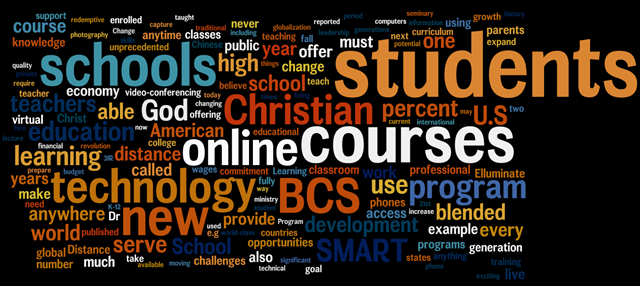
I may be way behind but I just recently discovered that I could create a word cloud to present a visual representation of written material.  Having just written an important memo to my staff on our new distance learning initiative, I decided to create a word cloud using the text of my memo.  Below is the result.

image

The size of a word in the visualization is proportional to the number of times the word appears in my memo.  What is interesting, and encouraging, is that “Student” is the most prominent word, reflecting the focus on the benefits to students of our new distance learning initiative.  

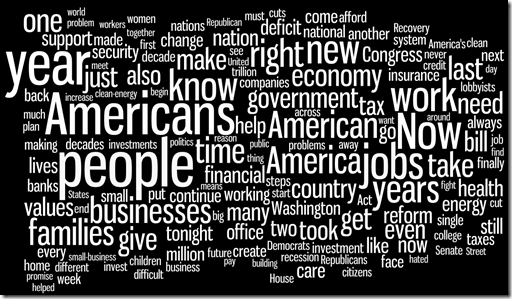
I used Wordle to create my word cloud.  Wordle has a public gallery of word clouds.  Here is one I created from President Obama’s State of the Union speech.

image

Here is a word cloud I created from President George Washington’s first Stat of the Union speech.

image

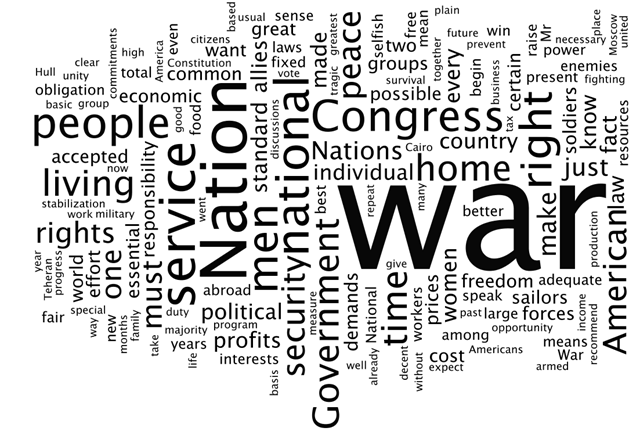
Finally, here is a word cloud I created from President Franklin Roosevelt's 1944 State of the Union speech.

image

Beyond being merely fun and interesting, which it is, it also has real educational value.  For example, as illustrated above, a history teacher could use word clouds to compare historical documents as a way of illustrating the primary focus of concern.  A literature teacher could compare two pieces of literature dealing with similar themes.  Or, you could analyze your presentations to determine if the word frequency matches your intended emphasis.  Obviously, frequency is but one indicator, but useful.

image

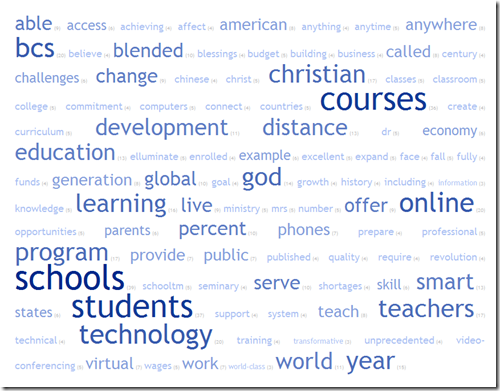
Whereas Wordle provides the flexibility to change the layout, font, color, etc., of your cloud, tagcrowd provides more options in handling the actual text, e.g., the number of words displayed, word grouping (similar words), etc.  This can be useful because you can group words that should be combined to better illustrate frequency, e.g., learned, learns, learning=learning.  The word cloud below was created from my distance learning memo using tagcrowd.

Helpful Tips

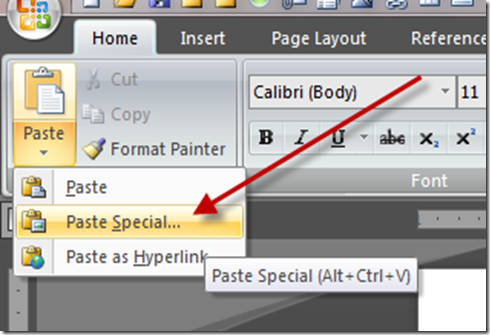
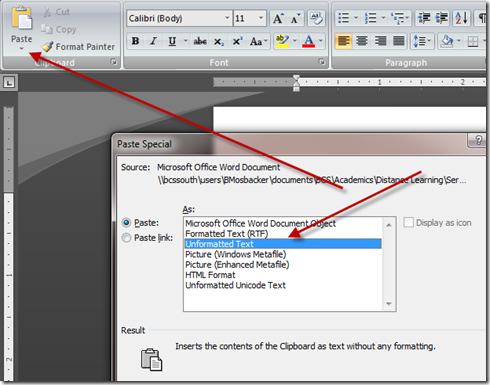
It is best to paste your text in the Wordle or Tagcrowd textbox in unformatted text format without paragraph marks, bullet points, etc.  The easiest way to do this in MS Word is to copy your text and then paste in in a new Word document as unformatted text.

image

image

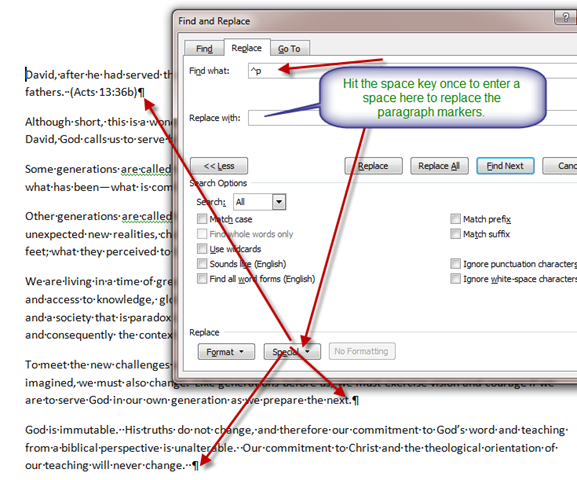
Then,  using the Fine/Replace tool in Word, replace paragraph marks, etc, with a space.

image

Copy and paste the resulting text in Wordle or Tagcrowd to create your new word cloud.

Goodbye to Discs and Pages?

By Dr. Barrett Mosbacker

This article, although related specifically to Apple and Amazon, the larger story is the fast movement to digital content for books/textbooks. 

Amazon vs. Apple: Battle of the books

With its new iPad, Apple is taking aim at Amazon's core business and its Kindle book reader. Can the 'e-tail' pioneer keep up as books, music and movies go all-download?

By Michael Brush

Amazon.com (AMZN, news, msgs) has come out on top in the digital revolution that's moving sales of books -- as well as compact discs, DVDs and lots of other products -- online.

But there's a second digital uprising afoot, and some experts think Amazon won't fare as well -- and could lose a sizable chunk of its core bookselling business.

Any Amazon losses would likely be gains for Apple (AAPL, news, msgs), which could do to its "e-tail" rival what Amazon has been doing to brick-and-mortar competitors.Apple's chief weapon in this battle of online giants -- the iPad -- will be rolled out April 3, with preorders starting March 12. Among the many things people will be able to do with these flat touch-screen computers: download and read digital books from Apple's new iBookstore.

Amazon has its own successful book reader, the Kindle. But Apple dominates in music downloads, so there's good reason to think it will take a big share of the market for downloadable books. "In music, Apple is the dominant player. Now Apple wants to do the same in books," says Jeffrey Liebenson an attorney with Herrick, Feinstein who was involved in some of the early music industry negotiations with Apple. And the iPad threat is part of a bigger-picture "digital transition" risk to Amazon that has led many investors to head for the exits.

The worry? Books are joining music in a broad shift to entertainment via digital download, and that's a game Apple tends to win.

Goodbye discs and pages

Think how this second digital revolution has changed the way we get entertainment:

  • When was the last time you bought a CD? Sales of CDs declined to 301 million last year from 712 million in their peak year of 2001, according to Nielsen SoundScan. Instead, people download music -- and Apple, with its iTunes store, dominates with a 70% market share. Amazon has 8% of the music sales market.

  • The same thing is happening to DVD sales. Video stores such as Blockbuster (BBI, news, msgs) are already hurting. Consumers will soon wonder why they should buy a DVD anywhere when they can get a movie online -- instantly.

E-Book price wars

Amazon hasn't ignored these changes. You can download music at the online retailer -- and from many other places, of course -- but Apple simply rules this game.

You can also get movies over the Internet from Amazon. Here Apple isn't dominant, but the field is crowded with strong rivals: cable companies, Netflix (NFLX, news, msgs), Hulu and Vudu, which was recently purchased by Wal-Mart Stores (WMT, news, msgs).

Books are next, and Amazon is certainly a major player in the digital book market with the Kindle. But imagine that Apple does to the book market what it's done in music. How much will be left for Amazon or anyone else?

The risk to Amazon's business is real, and it is one of the main reasons Credit Suisse analyst Spencer Wang is telling investors to avoid buying Amazon stock now. He has a "hold" rating on the online retailer and a 12-month price target of $130 a share, around where the stock sells today.

Because of these worries, investors sold out of Amazon stock earlier this year when it became clear Apple was entering the e-book market, analysts say. The stock is down from a 52-week-high at $146, though, like the market as a whole, it's way up from its lows.

Among those selling has been Amazon founder and CEO Jeff Bezos. In February, he sold 2 million shares of Amazon stock at prices between $116 and $120, according to Thomson Reuters. He sold 7 million shares in 2008-09, after selling no stock at all during 2005-07.

The strong side of Amazon

Mind you, this is a battle of giants.

Amazon's stock is up 50% since I wrote in August 2008 about a different battle for online sales ("How Amazon is beating up eBay"). The Standard & Poor's 500 Index ($INX) is down more than 10% from where it was then, and eBay (EBAY, news, msgs) is down slightly.

Amazon revenue grew an impressive 37% in the fourth quarter of 2009. It owns 22% of the North American book market, according to a Credit Suisse estimate. And it can continue to grow by doing what it does best: taking market share from brick-and-mortar retailers.

It sold an estimated 2 million Kindle book readers last year, and 3.1 million are expected to be sold this year, according to estimates by Barclays Capital analyst Douglas Anmuth. Amazon's stated goal of having every book ever printed in any language available on Kindle in less than 60 seconds is a bold one -- and however realistic, it means Kindle owners should eventually be able to get virtually any book they want.

The Apple advantages

Apple, though, is a fierce competitor, which is what makes the battle intriguing. And it has two big advantages as it goes after book sales.

Advantage No. 1: Apple has eager allies in the publishers.

To promote Kindle, Amazon has been offering great deals on new and best-selling e-books, a 55% discount off a typical $22 list price to $9.99. It's selling many e-books at a loss, says Wang, the Credit Suisse analyst.

This annoys publishers. They think Amazon has too much clout in the book business, and they don't want to see that extended to e-books. And they worry that a $10 price will "cheapen" books, training consumers to always expect low prices.

Enter Apple. It has offered publishers better prices than Amazon asks -- as long as the publishers make other vendors (i.e., Amazon) raise the retail price on best-selling e-books to $12.99 to $14.99. Most of the major publishers have signed on. If the alliance sticks, it will hurt Amazon's strategy for taking market share and fueling Kindle growth.

"All the publishers I talk with are hoping the iPad will live up to the hope," says Todd Eckler, the vice president for print and publishing at North Plains, which sells software to help providers put their content online.

Advantage No. 2: Apple is better than almost anyone at making gadgets.

This is key, because the gadgets can be crucial in determining which company eventually controls the content ecosystem, including the all-important formats that can be used to lock out competitors.

One of the main reasons Apple dominates music is the popularity of its iPod players and its music-playing iPhone. Lots of companies make music players, but Apple dominates so thoroughly that "iPod" is nearly a generic term.

Though we won't know for sure until it hits the market, with its smooth interface and bright color screen, the iPad seems sure to be a comfortable way to read books, believes Scott Testa, a professor of business administration at Cabrini College in the Philadelphia area and an avid Kindle user. "The iPad is going to blow the Kindle away as far as ease of use and the quality of the screen," he says.

Amazon's gadget will have the price advantage. The Kindle starts at $250 and is likely to get cheaper soon. Apple's iPad will start at $500; if Apple wins, it will likely be because the iPad does much more.

Though the iPad's features and processing power will be overkill for the simple act of reading a book, they're likely to contribute to an evolution in what constitutes a book that could move that market toward Apple.

A next-generation iPad book could easily include video on "the making of the book" as with DVDs, an author interview or music -- features that will make book reading a richer experience, says Eckler, of North Plains, which sells software that helps publishers do these things.

Beyond books, consider that the many potential customers who already have deep libraries of iTunes music and video can play those on their iPad. They don't work on a Kindle or on other manufacturer's devices. If customers buy only one device, that's an incentive to go with the iPad.

The Google wild card

Amazon also has Google (GOOG, news, msgs) to worry about. The latter is scanning as many books as possible to build up the world's biggest digital book database.

We're still not sure how Google plans to make money off this, but one approach is obvious: Google will likely discount books (or give away books in the public domain, without copyright limits, for free), and make up the difference by charging sponsors for ad words, just as it does for search. Plus industry experts believe that like Amazon and Apple, Google will roll out its own book reader at some point soon.

So what to do with Amazon?

Against this backdrop, what does Amazon's future hold?  

An Amazon spokesman declined to comment for this column. But in a recent conference call with investors, when asked about the emerging book battles, Amazon finance chief Thomas Szkutak responded: "We think we are positioned very nicely from a digital perspective. We think we are focused on the customer, and I think Kindle is certainly a good example of that."

Even without the price advantage, the Kindle would be good enough for many book fans, particularly older readers who will be happy to read books and newspapers on the Kindle's black-and-white screen. "It is a generational thing," says Eckler. "The Kindle is simple. There are not a lot of buttons."

Wang, of Credit Suisse, believes Amazon will continue to see 7.5% annual growth in North American book sales over the next five years, even with Apple entering the market.

There's also a macroeconomic reason Amazon will be OK: Online sales still represent only 3.8% of overall retail sales in the U.S. So there is still plenty of room for Amazon, the leader in the space, to grow as more retail moves online, says Mark Mahaney of Citigroup.

The key takeaway for investors is this: Don't buy Amazon stock expecting the kind of huge gains seen over the past couple of years. Many market players will wait to see how the online retailer manages the all-digital transition, but with savvy competitors such as Apple attacking its core book market, growth will slow.

Apple's stock, on the other hand, just keeps rising. You would be buying today at an all-time high, which can be risky. But citing the iPad, plus continued strength in iPhone and Mac sales, Credit Suisse analyst Bill Shope has an outperform rating and a 12-month price target of $275 on Apple stock, from about $223 today.

For consumers, the book battle could mean higher prices on new and best-selling e-books, as Apple aligns with publishers to raise prices above Amazon's big discounts. But gadget prices should fall quickly as the competition heats up.

And the cool news is that the iPad may open up a whole new world of "words" that brings lots of cool features to the concept of a book. Amazon and others will have to match technologies or lose out. The simple act of reading is changing forever.

At the time of publication, Michael Brush did not own or control shares of any company mentioned in this column.

What’s in a Chicken McNugget? Read On Only If You Have a Strong Stomach

By Dr. Barrett Mosbacker

Ever wonder what’s actually in a McDonald’s Chicken McNugget? Turns out, the “chicken” alone contains seven ingredients. And that’s before you even get to the breading. Sadly, many of our favorite foods (especially fast foods) weren’t merely crafted in kitchens, they were also designed and perfected in labs. We uncovered the ugly truth when doing research for Eat This, Not That! Restaurant Survival Guide. What we found wasn’t pretty—or appetizing. Before you mindlessly chew your way through another value meal, take these mini-mysteries (conveniently solved below) into account. Sometimes the truth is tough to swallow.

What’s in a Chicken McNugget?

You’d think that a breaded lump of chicken would be pretty simple. Mostly, it would contain bread and chicken. But the McNugget and its peers at other fast-food restaurants are much more complicated creatures than that. The “meat” in the McNugget alone contains seven ingredients, some of which are made up of yet more ingredients. (Nope, it’s not just chicken. It’s also such nonchicken-related stuff as water, wheat starch, dextrose, safflower oil, and sodium phosphates.) The “meat” also contains something called “autolyzed yeast extract.” Then add another 20 ingredients that make up the breading, and you have the industrial chemical—we mean, fast-food meal—called the McNugget. Still, McDonald’s is practically all-natural compared to Wendy’s Chicken Nuggets, with 30 ingredients, and Burger King Chicken Fries, with a whopping 35 ingredients.

For more fast foods to watch out for, memorize this list of the 20 Worst Drive-Thru Foods.

Click here to read the entire article—if you dare!

The Worst Drive-Thru Meal in America

Worst Grilled Chicken

Worst "Healthy" Food

Worst Cheeseburger

Worst Fish Sandwich

Worst Dessert

Worst Potato Side

Worst Milkshake

Worst Chicken Strips

Worst Side

Worst Drive-Thru Kids Meal

Worst Roast Beef Sandwich

Worst Crispy Chicken Sandwich

Worst Salad

Worst Fish Entree

Worst Drive-Thru Breakfast Sandwich

Worst Hot Sandwich

Worst Mexican Entree

Worst Value-Menu Item

Worst Drink

College: Are Parents Getting Their Money’s Worth? Are They Getting “More” Than They Bargained For?

By Jeff Myers

This fall about two million American students will leave for college for the first time to receive an education at a yearly cost of $12,000 a year for a public university and up to $50,000 for a private one. Scholarships and grants reduce the cost for most families, but still, the Wall Street Journal reports that the average student leaves college with $23,186 in debt.

The total cost for this transaction is somewhere between 25 and 40 billion dollars. Per year.

Oh well, at least families are getting their money's worth.

Or not.

A recent study confirms what many parents have long suspected, that going to most colleges can make kids forget the things that are important and embrace values that are counter to what they learned growing up.

Before I share this study's results, let me say this to parents: leftist professors don't feel sorry for you. As far as they’re concerned, you’ve been oppressing the masses to get that money anyway, so it’s deliciously ironic that you not only turn your children over to the indoctrinators, but that you fork over 50k to 200k for the privilege.

Don't take my word for it. Here's what the late Richard Rorty, one of the most prominent philosophers of the 20th century, said on the subject:

"... I, like most Americans who teach humanities or social science in colleges and universities ... try to arrange things so that students who enter as bigoted, homophobic, religious fundamentalists will leave college with views more like our own ...  The fundamentalist parents of our fundamentalist students think that the entire ‘American liberal establishment’ is engaged in a conspiracy. The parents have a point...we are going to go right on trying to discredit you in the eyes of your children, trying to strip your fundamentalist religious community of dignity, trying to make your views seem silly rather than discussable. We are not so inclusivist as to tolerate intolerance such as yours ... I think those students are lucky to find themselves under the benevolent Herrschaft [domination] of people like me, and to have escaped the grip of their frightening, vicious, dangerous parents ..." [editor’s note: sorry for all the ellipses, but it's hard to summarize Rorty's windblown rhetoric].

When it comes to reshaping values, liberal universities know precisely what they’re doing. About four out of five students walk away from their Christian faith by the time they are in their twenties.

The Indoctrination Route: Citizenship--Bad; Leftist Politics--Good

In February the Intercollegiate Studies Institute released its annual report entitled, “The Shaping of the American Mind.” ISI researchers studied students' knowledge of basic citizenship questions, along with 39 issue-based propositions.

They found that college graduates are dangerously ignorant of basic civics. For example, fewer than one in two college graduates know that the phrase "We hold these truths to be self evident..." is from the Declaration of Independence (10% actually think it is from the Communist Manifesto).

When it comes to political radicalism, however, colleges pass with flying colors. Graduates are significantly MORE likely to believe in abortion on demand and same sex marriage, and significantly LESS likely to believe that the Bible is the word of God, that prayer should be allowed in schools, or that anyone can succeed in America with hard work and perseverance.

The Transformation Route: Being Caught Off Guard--Bad; Being Confidently Prepared--Good

Obviously not all colleges are destructive. There are even a handful of great ones (I would humbly suggest that the one I teach at--Bryan College--is one of the excellent few).

But most Christian parents feel hamstrung. They are concerned for their kids but also realize that with few exceptions (such as flat-out genius) most young people have no chance of attaining leadership positions without a college degree.

There is a solution and it is available now. Please, if you have a college-bound student, listen carefully to what I'm about to tell you. This is important even if your child is going to a "safe" college (some so-called "Christian" colleges are actually better at convincing kids to walk away from their faith than some secular colleges).

A two-week Summit Ministries course is a must. This summer. Find out more [here].

At Summit students ages 16-21 invest 12 days gaining the confidence they need to understand and defend an intelligent biblical worldview. They join a vast network of mentors whose books, writings and personal encouragement help sharpen them for life-long leadership. They stand shoulder to shoulder with newfound friends who help them stand strong.

Now Is Not The Time for Shortcuts

There is much at stake. Having your child read an apologetics book or go to a weekend conference is great, but it’s not the same as a two-week Summit experience, and here’s why:

1. At Summit students can ask questions as they arise. Over the course of 12 days students are able to form questions and interact with top Christian professors, mentors, and classmates. As they become comfortable, they open up in small groups, around the meal tables and in open forums with speakers. This gives students confidence that everyday people really can defend what they believe.

2. At Summit students enjoy being given the responsibility to think through issues as adults. Summit asks students to forsake adolescence and step up into mature adulthood. Over the course of 12 days they come to believe that it can actually be done.

3. Summit breaks the stranglehold of negative peer pressure. Young adults will seldom attempt to become anything more than what their peers think they can be. Summit students learn how to reverse this pressure and support one another in successfully thinking and living Christianly.

4. Summit provides personal contact with expert mentors. At Summit students spend 12 days with experts who have the depth of experience needed to delve deeply into the complex challenges they will face. These experts are specially selected based on their ability to communicate effectively with students.

5. At Summit, parents find that their parental role and their Christian values are affirmed and supported. Kids are always asking, "Who else says so besides mom and dad?" At Summit students are encouraged to honor their parents and be reconciled to them. This helps moms and dads strengthen their relationship before their sons and daughters leave for college, which is crucial.

Where Christian Leaders Send Their Own Children for Training

Summit is not a miracle cure. But for 47 years it's been a trusted source when it comes to preparing students to be the kind of leaders who shape culture, rather than who are shaped by it. That's why evangelical leaders such as James Dobson and Josh McDowell endorse it so enthusiastically. It's also why they chose to send their children to Summit before college; there simply is no substitute for the excellent training and mentoring Dr. Noebel and his staff provide.

I believe in the Summit. In fact I am planning to speak at every Summit Ministries session in the U.S. this summer in Colorado, Virginia, Tennessee and Wisconsin.

Summit enrollment is limited by space. Most sessions do fill up, but you can download an application [here]. Scholarships are available for those in financial need.

Remember: Before College, Summit. Please forward this to any parent who doesn’t yet understand this.

Dr. Jeff Myers is founder and president of Passing the Baton International. Jeff speaks to tens of thousands each year on worldview and leadership issues. This article was taken by permission from Jeff’s E-Newsletter “Get Ready to Lead.” To subscribe, please visit www.passingthebaton.org. For more information on Summit Ministries, please visit www.summit.org.

*Richard Rorty, "Universality and Truth," in Robert B. Brandom (ed.), Rorty and His Critics (Oxford: Blackwell, 2000), pp. 21-22.

**George Barna, "Twentysomethings struggle to find their lace in Christian churches"; Ken Ham and Britt Beemer, Already Gone: Why Your Kids Will Quit Church and What You Can Do to Stop It (Green Forest, AR: Master Books, 2009), p. 24.

Asking Important Questions About Technology

By: Mitchell Salerno, High School Principal and Arlene Outerbridge, Director of Guidance (The Master's Academy)

A recent editorial in The Philadelphia Inquirer (Click here to view article) raised questions about “one-to-one computing” initiatives sprouting up in schools around the country. Zimmerman (2010) argues that this technology has the potential to drive students further away from human interaction and that there is little evidence that one-to-one initiatives actually increase student learning. Zimmerman further suggests that qualified and talented teachers, rather than the latest technology, will improve learning. Humorously, Zimmerman quotes Thomas Edison (in 1922), “I believe the motion picture is destined to revolutionize our educational system and that in a few years it will supplant largely, if not entirely, the use of textbooks.”

If you listen carefully, you will hear similar language among today’s educational reformers. Simply replace “motion picture” with “Kindle” or “iTouch” or “laptop.” Are these tools going to revolutionize education and replace textbooks?

I am a technology fan and have pushed technological initiatives at every opportunity. Our students need to understand how to live in a 21st century world and our schools are largely responsible for providing opportunities for students to interact with the abundance of technological tools available to them. However, our schools must continue to ask the hard questions such as:

· How do we see technology as a positive for our students?

· How do we see technology as a hindrance to our students?

· If we add (insert technology), how do we ensure that the positive benefits to our students outweigh the negative?

Zimmerman (2010) also raises a secondary question regarding the parent’s ability to aid the students as they navigate the new world of technology. Our students are growing up in a fundamentally different world than we grew up in. As an example, I was at the barbershop today and my barber and I were discussing the latest video games. We had seen an ad on the television and couldn’t tell if it was for a movie or a video game. It is amazing to think that technology has advanced to this point. So as all old-timers do (I am 34!), we began to tell stories of how things used to be.

As I reflect on that conversation, I am amazed at the fundamental difference between our world in the 1980s and the world today. Yet, I am also amazed at how the human condition has not changed. Christian schools, and education in general, really has not changed. We are still asking the same questions about what students need to learn, how they should learn, etc. While our ability to do stuff has increased exponentially, our “condition” has not changed at all.

It is possible that our students’ parents do not know how to deal with the rapidly changing technological landscape. Our efforts to train the children are often the easiest task we have. Zimmerman (2010) shares, possibly inadvertently, his struggles as a parent in this new technological world. Our parents might be struggling as well. Our schools need to be mindful of the “old-timer’s” struggle with encroaching technology and begin to ask questions such as:

· If we add (insert technology), how do we combat parent fears?

· How do we help parents understand the purpose and benefit of this technology?

· Have we considered the impact this technology will have on the home?

In the end, technology is merely a tool. It certainly may be leveraged for the Kingdom, but we must begin to teach our students how to properly value and utilize technology, beginning with our own actions. As we devise new ways to implement technology, let’s make sure that we are taking care to keep Christ first and refuse to allow education to be about tools rather than children.

References

Zimmerman, J. (2010, March 2). Should schools be giving out computers?. The

Philadelphia Inquirer. Retrieved from

http://www.philly.com/inquirer/opinion/85934327.html

What is CCEI and Why Should You Care?

image

By Mitchell Salerno with Jon Keith

CCEI is the Interim Programs and The Christian Coalition for Educational Innovation. 

Do you currently conduct an interim program such as J-Term or Winterim?  Are you interested in beginning an interim program in the coming years?  A group of schools that currently operates interim programs or that are interested in interim programs recently organized to form a coalition for the purpose of collaborating, partnering, and advancing interim programs.

In October 2009, several school leaders expressed interest in working together and wondered if there were other schools that wanted to do the same.  An initial email invitation was made to schools that were known to conduct interim programs and seventeen schools responded.  Excited by this initial response, all agreed to meet via conference call in November 2009.  This meeting was so successful that it became apparent that the group needed to meet in person to explore the possibilities.  To that end, fourteen schools traveled to Orlando, Florida to meet at The Master's Academy in January 2010.  This initial meeting was extremely fruitful and encouraging to all involved and the Christian Coalition for Educational Innovation (CCEI) was born.

Currently, CCEI is in the process of creating a charter and seeks to find other Christian schools that have a passion for innovation.  In particular, CCEI is interested in bringing together Christian schools that are interested in interim programs.  Member schools do not need to operate a particular form of interim program, but, rather, should be interested in interim programs in general.  Additionally, schools that desire to build relationships centered on innovation should consider membership.

If you are interested in finding out more about membership in CCEI or about interim programs, please contact Mitchell Salerno at MitchellSalerno@MastersAcademy.org or Jon Keith at JonKeith@WheatonAcademy.org

You can also download the Brochure

Why and How to Use Twitter

By Dr. Barrett Mosbacker

Why should you use Twitter?

That was my first reaction when I was first exposed to Twitter.  Frankly, I had my doubts.  However, as I have gained more experience with Twitter I have discovered that it can be a very useful and powerful tool—the trick is to use it properly to meet your needs.  If it is not used wisely it will merely produce “noise” in your life.

In the Complete Guide to Twitter, the author list the following benefits of using Twitter:

  • Being able to “live-Tweet” an event. Twitter’s “moment” when it went from banality to mainstream was at the 2007 SXSW conference when attendees were rapidly twittering conference developments as they happened. People could then stand in front of two large screens and watch the Twitter timelines rapidly and constantly updating with what was happening next. Call it instant messaging on steroids.

  • Being able to break the news live from where it happens. The best example of this is, of course, Iran when the public went onto the streets in protest of the 2009 national elections. Iranian tweeters were able to bypass official government restrictions and tweet everything that was going on in their country. It got to the point where “official” news agencies such as CNN and the BBC were forced to get their news from Twitter because their own journalists had been expelled from the country. These messages were then presented on the television screen to the viewers. Twitter messages also give the news a “human face” because they are coming directly from the people most affected by the events in question.

  • Being used by friends & family to "follow" each other: are your family and friends in another country from you? Do you have trouble keeping in touch with friends, either real or cyber? Then Twitter makes an excellent tool for keeping in touch and finding out what your family and friends are up to and what they are thinking at that particular moment.

  • Real Time Event Search Engine: because of the continuous buzz, Twitter can be considered a rapidly updating search engine, powered by real people. It can be easily used to check what people are saying about currently unfolding events, or to check up on more personal, time-related issues (e.g. if Gmail is down for everyone or just you). We will get more into detail on this later in the manual.

  • Being able to promote your blog posts: If you use a website called Twitterfeed6, you can have all your blog posts automatically posted to a Twitter feed as they are published. This has proven to be a highly effective way of promoting a blog or website. Readers who live on Twitter instead of an RSS feed can be notified of your new material in their timeline.

  • Job networking: in this current economic climate, an unemployed person needs all the edge they can get and Twitter hasn’t been left out of their job seeking armoury. The site is now being used to ask for work and to look for suitably qualified candidates. Both job seekers and job providers are leaving messages on Twitter with what they need. Private messaging takes care of the rest. ). These tweets can then be retweeted to others and discussed by those who may decide to subscribe to your site later.

  • Being able to get the resources you need: Twitter has also been used if a user needs something or has something to offer. Need someone to car-share on a trip from San Francisco to New York? Do you have a spare conference room which you can loan out to someone? Are you selling something or looking to buy something? Then Twitter can be used as your interactive classified ads column. No more placing ads in the newspaper.

For excellent tips,tricks, and powerful resources for using Twitter, download the The Complete Guide to Using Twitter

Is Perception Reality?

By Mark Kennedy, (ACSI Canada)

Every now and then I hear it, even in Christian school circles. “Perception is reality”, they say with a kind of unquestioning conviction that suggests the discovery of a new immutable truth.

This, along with other snippets of pop business philosophy, have steadily made inroads into the board rooms of churches and Christian schools. Some are quite useful. It is not that we can’t gain insights and understanding from effective business principles and practices. The fact is that all truth, even in the area of business, is God’s truth. The problem comes when we accept any philosophical assertion without testing it against the teaching of scripture.

And that is my concern about the “Perception is reality” concept. In keeping with post modern thinking it implies that people can have their own private self-created realities –their own personal truths.

Some people reason that if only they could manipulate those perceptions effectively they would be able to get what they want –in our schools that could mean creating new pro Christian school “realities” in people’s minds.

It seems to me that the whole idea is false. We can’t have our own private versions of reality anymore than we can have our own personal definitions of truth. And Christians more than anyone should realize that truth (which is the only genuine reality) exists despite our perceptions. William Blake puts it well in his poem, The Eternal Gospel.

“Thus Life’s five windows of the soul
Distort the heavens from pole to pole,
And lead you to believe a lie
When you see with, not through the eye.”

To my thinking the final word on the subject comes from Isaiah. In chapter 11 verses 3 and 4 he contrasts the undependable nature of personal perceptions and with God’s truth.

“He will not judge by what he sees with his eye,
Or decide by what he years with his ears
But with righteousness he will judge the needy
With justice he will give decisions for the poor of the earth.”

Nuff said.