
Make Time to Think: Why Every Christian Leader Needs Mental White Space
/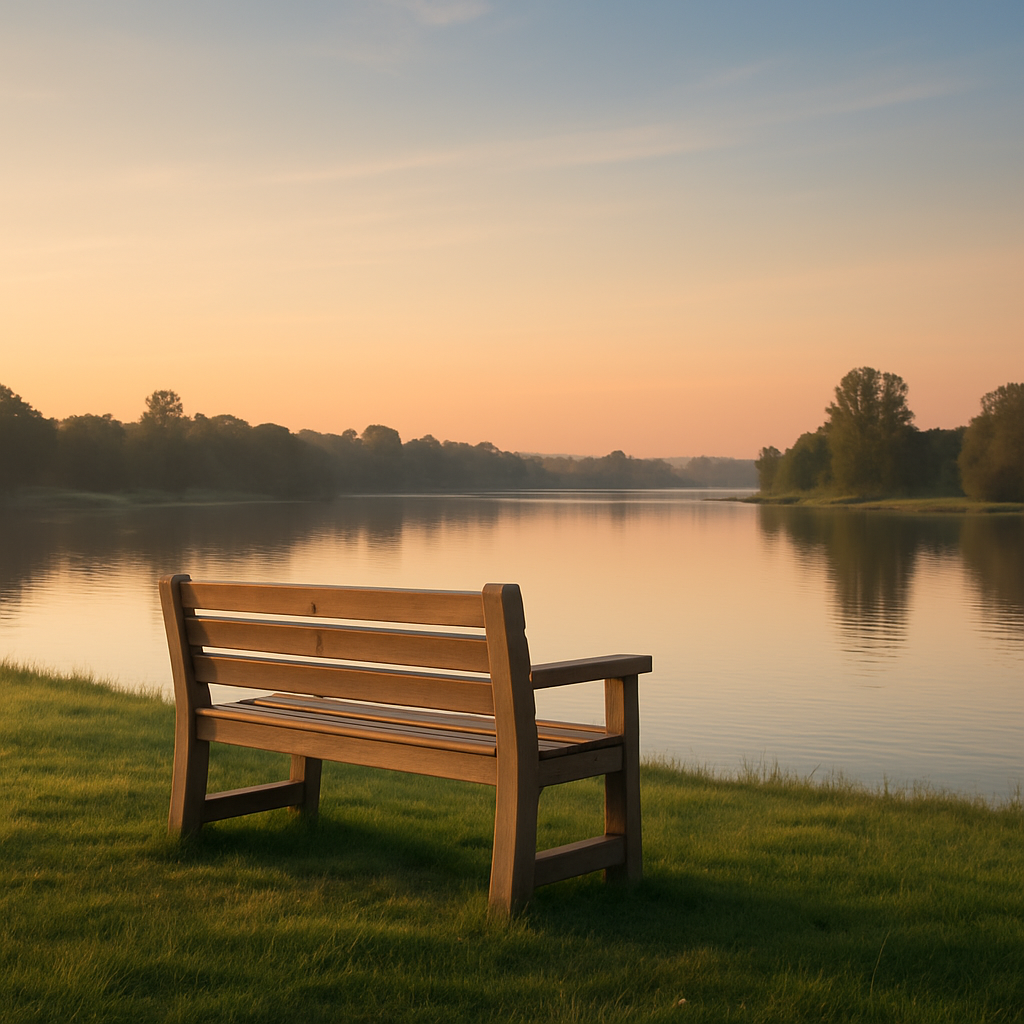
AI Generated
By Dr. Barrett Mosbacker
Have you ever walked into a room filled with the aroma of freshly baked bread or warm chocolate chip cookies? The effect is almost immediate—a welcoming sense of warmth that stirs fond memories and awakens the appetite. We often call such dishes “comfort food.” Why? Because certain foods have a unique ability to soothe us, often tied to cherished memories of people and places around shared meals.
There is another kind of comfort—one that brings tranquility and clarity to the mind and heart. It doesn’t stir hunger, but rather creativity and focus. I call it mental white space.
White space is a vital element across creative disciplines—writing, art, design, music, photography, and more. In writing, it enhances readability and gives the mind room to pause and reflect. In visual art and photography, it draws the eye to what matters. In design, it organizes and clarifies. In music, silence shapes rhythm and emotion. Though it appears empty, white space is active: it frames, highlights, and gives meaning to what surrounds it.
White space breathes.
It gives our minds and souls the space they need to rest, refocus, and ponder what matters most.
Why We Need White Space in our Leadership
Research affirms the value of carving out moments for quiet reflection. Just as visual white space in design brings clarity and order, mental white space sharpens focus, allowing us to process thoughts without distraction. The result is greater creativity and more thoughtful decision-making. Similarly, studies on solitude show that even short periods away from noise and screens strengthen mental resilience and foster deeper insight.
The benefits of white space extend beyond the mental; they reach into our emotional and spiritual well-being. Christian writers have pointed to the idea of spiritual white space--a time to breathe spiritually by reflecting on God's Word and His world, and by resting in His presence. Moments of quiet create space for prayer, reflection, creativity, and the reorientation of our hearts toward what matters most.
Even our physical environment reinforces the need for white space. Research in architecture and environmental psychology shows that natural elements, open spaces, and curved designs reduce stress, elevate mood, and enhance attention. Numerous studies also affirm the restorative benefits of time spent in nature--an ideal setting for cultivating mental white space. Whether in our interior lives or physical surroundings, white space helps us focus, breathe, and be restored.
How to Create Mental White Space
Many things in life crowd out mental white space. Some are external and beyond our control. But many are self-imposed: doom-scrolling the news, mindlessly scrolling social media, over-scheduling our days, neglecting the Sabbath by filling it with activities like sports, or living beyond our means--leaving little financial margin and a great deal of stress. We fill every nook and cranny of our lives, leaving ourselves with little mental, spiritual, financial, or physical breathing room.
The solution isn't to stop reading the news, abandon social media entirely (though that's worth serious consideration), or spend all day sleeping on Sunday. The solution is to create margin--for quiet, calm reflection, rest, reading, and unhurried thinking.
Here are a few simple ways to create mental white space:
Reduce TV Time
As I wrote in From Screens to Simplicity: Reclaiming Beauty in the Evening Hours, my wife and I became convicted that we were spending too much of our free time watching television. We decided to establish a new evening routine. Rather than heading straight to the TV after dinner, we now begin our evenings with reading and beautiful music..
Preschedule What is Most Important
“We can’t FIND time, but we can MAKE time.” — Patricia Lynn
The way to make time is to schedule it in advance for what matters most. Over the years, I've learned to block my calendar for devotions, exercise, focused project work, and white space for reading, thinking, and writing. Occasionally, unforeseen circumstances intrude on these blocks. Still, most of us have more control over our schedules than we're willing to admit.
Here is how I structure my calendar to protect time--as much as possible--for what matters most.
4:30 - 5:15 wake up, coffee, and devotions
5:15 - 6:00 exercise and get ready for work
6:00 - 6:45 reading
6:45 - 7:00 drive to the office
7:00 - 9:30 uninterrupted project work — no meetings
9:30 - 4:00 meetings, email, calls, report writing, and other work
4:00 - 4:15 drive home
4:30 - 5:00 dinner
5:00 - 5:30 reading
5:30 - 8:30 family time or evening commitments at school
8:30 to bed
Quiet Exercise
In the past, I typically watched a ballgame or listened to a podcast while on the treadmill. But recently, I’ve eliminated those distractions to create mental white space—no TV, no podcasts, no music. Just the hum of the treadmill and my labored breathing. The quiet frees my mind to wander, reflect, and imagine. Within minutes, my thoughts drift to a book I’m writing, an article in progress, or a new idea taking shape. When inspiration strikes, I quickly ask Siri to remind me: “Add this to the book,” or “Explore that idea later.”
I know what you’re thinking: “Are you crazy? I could never exercise in silence.” I used to think the same. It’s difficult at first, but over time, a new habit forms. Eventually, you not only adjust—you begin to look forward to the quiet.
Take a Quiet Walk
Walking is a wonderful, free form of exercise. It's also a powerful way to create white space--for thinking, reflecting, or praying.
Jonathan Edwards, a central figure in the First Great Awakening, often took solitary walks in the woods for prayer and contemplation. These quiet walks provided the solitude he needed for deep theological reflection and helped shape the clarity and power of his sermons and writings. He believed that time in nature deepened one's appreciation of God's creation and fostered closer communion with Him.
Reflecting on this practice, Edwards wrote: "I spent most of my time in thinking of divine things, year after year; often walking alone in the woods, and solitary places, for meditation, soliloquy, and prayer, and conversation with God."
Conclusion
For school leaders, summer is the perfect time to reconsider how we spend our time and to recalibrate our schedules and routines. Take a walk in silence and consider: how can you create more mental white space in your life? How can you encourage others in your family and school to do the same?
Just as the aroma of warm bread or cookies can comfort and awaken the senses, mental white space brings clarity, peace, and creative renewal to the mind and soul. But it will not appear on its own—just like making time for what is important, white space must be made. If we are not intentional about creating it, the noise will crowd it out.
As Christian leaders, we need space not only to think clearly but also to hear the still, small voice of the Lord as we mediate on His Word. We need mental space to form new connections, reflect, and generate fresh insight for the work entrusted to us.
Mental white space is not a luxury; it is a stewardship. It creates room for wisdom, fosters creativity, and renews our ability to lead with clarity and peace. In a noisy world, leaders must step back into quiet places—so they can lead with fresh insight and steady, calm purpose.
_____________________________
Sources
Baumann, O. (2024). ‘Profoundly positive influence’: Study reveals brain hack to instantly lift your mood. News.com.au. https://www.news.com.au/lifestyle/health/wellbeing/profoundly-positive-influence
Brownell, D. (2014). Finding Spiritual Whitespace. Today’s Christian Living. https://todayschristianliving.org/whitespace
Cherry, K. (2023). Why Alone Time Could Be Key to Improving Your Mental Health. Verywell Mind. https://www.verywellmind.com/how-important-is-alone-time-for-mental-health-5184607
Kim, S. S., Kim-Godwin, Y., Gil, M., Kim, D., & Cheon, Y. K. (2021). The Benefits of Spiritual Diaries: A Mixed-Method Study in Korea. Journal of Religion and Health, 60(6), 3978–3992. https://doi.org/10.1007/s10943-021-01277-8. https://pubmed.ncbi.nlm.nih.gov/33978877/
Travers, M. (2025). 3 Ways The ‘White Space’ In Our Life Helps Us Thrive—By A Psychologist. Forbes. https://www.forbes.com/sites/traversmark/2025/01/27/3-ways-the-white-space-in-our-life-helps-us-thrive-by-a-psychologist/
Weir, K. (2020). Nurtured by nature. American Psychological Association. https://www.apa.org/monitor/2020/04/nurtured-nature.